This is far from the first Best Picture winner to leave me wondering what the Academy saw in it to make it worthy of its highest award. It features Bing Crosby, one of the hottest entertainers of the time, crooning and meandering his way through a tale of kindness and redemption. Maybe it was the allure of Crosby’s charm. Maybe it was a weak year for films. While Going My Way is not an inferior film by any means, it doesn’t exactly light up the screen these days.
Father Charles O’Malley (Bing Crosby) is assigned to a financially struggling church in New York City. The elder priest of the church, Father Fitzgibbon (Barry Fitzgerald), does not approve of O’Malley’s nonchalant attitude and his lack of strict, conservative Catholicism. Rather than look down upon the sins of others or look the other way for regular mass attendees, O’Malley inserts himself into their lives. By seeking to understand and make a difference, O’Malley shakes the foundation of the parish and the lives of those around him.
This is a nice story about a likeable new guy in town who mixes things up for the better. Most, if not all the supporting characters are enjoyable. What Going My Way lacks is wow factor. It’s a solid little film but it’s also the kind of heart-warming ‘rise-above’ sort of yarn that has become clichéd and predictable. That’s not the fault of anyone involved with this film. Rather, all the half-baked feel-good flicks over the decades have numbed our senses to these kinds of inspiring tales.
Praise is due to Bing Crosby for not being as stiff as some singers-turned-actors have been. Then again, Crosby was more than just a singer- he was an entertainer. He and other crossover artists had more presence and charisma than most of the compartmentalized stars of today. Sure, they made records, but they also performed to smaller audiences, not just stadiums. Stars like Crosby knew how to work a room and that helps when the time comes to work the camera.
The people behind the camera, however, are another story. The director may have won awards, but there isn’t much in the way of visual stimulation to be found here. I counted a number of static shots where the cast has to move about. There are still elements of composition to this set up- people still need to hit their marks and be placed just right- but it’s not as visually interesting to watch people move about without moving with them. It’s old school Hollywood and perhaps I shouldn’t complain, but I’ve seen much more daring directorial decisions in films around and before Going My Way’s release.
This film will probably continue to be known for as long as there are avid admirers of Bing Crosby’s work. Without Crosby front and center (and that Oscar win), this film would have been forgotten about in fairly short order. It’s a charming, nice, safe film that will entertain those of us who enjoy classic cinema, but nothing outside of its casting possesses that legendary quality that demands it be watched.
RATING: 3.5 out of 5
Friday, August 29, 2014
Wednesday, August 27, 2014
Fantasia 2000 (1999)
Can this film really be considered a sequel? If so, it probably marks the longest time between a film and its sequel in film history. The original Fantasia was conceived by Walt Disney to showcase how animation really could achieve high-art status. With no need to doubt those lofty goals anymore, Fantasia 2000 feels more like a recycled idea that fails to build on its predecessor.
Of the eight shorts that comprise Fantasia 2000, only four of them are clearly memorable to me. One of these is “The Sorcerer’s Apprentice,” or the one short from the original Fantasia that people still recognize today. It’s the exact same short that appeared in 1940, so I have to completely disregard its presence in order to grade the film’s new contributions. It only makes sense to me to base my rating on the merits of what is new. “The Sorcerer’s Apprentice” is a masterpiece of a short but its inclusion almost feels lazy to me. It’s as if Disney threw it in to give people a reason to see the film in the first place.
The animation to George Gershwin’s “Rhapsody in Blue” is the standout. It depicts a bustling Depression-era day in New York City and the animation is styled after Al Hirschfield’s cartoons of that time. This is the one short that lives up to what the original Fantasia set out to do- blend animation and music to artistically express life and emotion.
Donald Duck shows up toward the end of the film as Noah in “Pomp and Circumstance.” It’s amusing to watch him struggle with the ark and all the animals on board but it lacks the wow factor of “Rhapsody in Blue.” The only other notable short is “Pines of Rome.” It features a family of humpback whales who end up being able to fly. This piece was used heavily in marketing the film but all it really amounts to is “oh, and there were some flying whales.”
It is interesting that Disney went on to have much more success in the new millennium with computer animated tales (the most successful of which coming from Pixar). Could Fantasia 2000 be seen as traditional animation's last gasping attempt to assert its relevance? Yes, but I don’t think that’s entirely fair. Traditional animation is far from dead; it just fails to wow the eyes and minds of today’s audiences like CGI can.
Fantasia 2000 is every bit the risky experiment that Fantasia was in 1940. It is a bold proposition to ask audiences to sit through some arty shorts. This time around, there is no urgency in the mission. Fantasia 2000 functions more as nostalgia for the original and other Disney shorts of yesteryear. This film runs much shorter than its predecessor but it still feels as if time drags while you watch it. The animation is crisp but there is no big draw here. It may be far from pointless, but this feels like a film without much of a purpose. I recommend it only for the most hard-core Disney fans.
RATING: 3 out of 5
Of the eight shorts that comprise Fantasia 2000, only four of them are clearly memorable to me. One of these is “The Sorcerer’s Apprentice,” or the one short from the original Fantasia that people still recognize today. It’s the exact same short that appeared in 1940, so I have to completely disregard its presence in order to grade the film’s new contributions. It only makes sense to me to base my rating on the merits of what is new. “The Sorcerer’s Apprentice” is a masterpiece of a short but its inclusion almost feels lazy to me. It’s as if Disney threw it in to give people a reason to see the film in the first place.
The animation to George Gershwin’s “Rhapsody in Blue” is the standout. It depicts a bustling Depression-era day in New York City and the animation is styled after Al Hirschfield’s cartoons of that time. This is the one short that lives up to what the original Fantasia set out to do- blend animation and music to artistically express life and emotion.
Donald Duck shows up toward the end of the film as Noah in “Pomp and Circumstance.” It’s amusing to watch him struggle with the ark and all the animals on board but it lacks the wow factor of “Rhapsody in Blue.” The only other notable short is “Pines of Rome.” It features a family of humpback whales who end up being able to fly. This piece was used heavily in marketing the film but all it really amounts to is “oh, and there were some flying whales.”
It is interesting that Disney went on to have much more success in the new millennium with computer animated tales (the most successful of which coming from Pixar). Could Fantasia 2000 be seen as traditional animation's last gasping attempt to assert its relevance? Yes, but I don’t think that’s entirely fair. Traditional animation is far from dead; it just fails to wow the eyes and minds of today’s audiences like CGI can.
Fantasia 2000 is every bit the risky experiment that Fantasia was in 1940. It is a bold proposition to ask audiences to sit through some arty shorts. This time around, there is no urgency in the mission. Fantasia 2000 functions more as nostalgia for the original and other Disney shorts of yesteryear. This film runs much shorter than its predecessor but it still feels as if time drags while you watch it. The animation is crisp but there is no big draw here. It may be far from pointless, but this feels like a film without much of a purpose. I recommend it only for the most hard-core Disney fans.
RATING: 3 out of 5
Monday, August 25, 2014
SECOND HELPINGS: Psycho (1960)
I watched a lot of horror and slasher films as a teenager. When I watched Psycho for the first time in college, it didn’t register very much with my moderately desensitized brain. It wasn’t scary and I thought it was a little boring. A few years later, I watched it again. By that time I was paying more attention to the craft of filmmaking and appreciated older films much more. Needless to say, my rating took a hefty jump.
A few years after my second viewing, I had the opportunity to watch Psycho again with my wife. She does not like horror movies but I managed to convince her that she wouldn’t be grossed out. After all, this was a film from 1960. Just like Vertigo, this is a fun film to watch with someone who has never seen it and doesn’t know about any of its plot twists.
My wife found Norman Bates creepy but never overly dangerous. She managed to put two and two together before the surprise ending but that didn’t make it any less uncomfortable. That is where the power of Psycho rests- everything about it is unsettling. Both the content of the film and its structure are designed to disarm you and prevent you from slipping into an ordinary film-going experience.
It really takes a second or third viewing to appreciate the character of Norman Bates. Your first time watching, you are so bent on figuring out what is going on that you fail to see the finer details Anthony Perkins has on display. At first glance, his body movements, mannerisms, and glances throw off an unnerving vibe but only enough to make Norman seem a little off. Everybody knows somebody who seems a little off, which makes Norman odd but not too unusual. Repeat viewings reveal the subtle menace in his stance, eyes, and words. They chide us for not picking up on those signs before while simultaneously inviting us to relish in the evil residing within our antagonist.
If Norman Bates is only a little unnerving the first time you watch Psycho, the structure is apt to jar you outright. We start out the film following Marion Crane (Janet Leigh) on the lam after stealing money from her employer’s client. After getting to know her over the first half of the movie, our supposed main character is killed. Focus then shifts to Norman Bates as he tries to cover up Marion’s murder. While this tactic may not be as unique anymore, it had to be shocking at the time.
Also worth noting is that Psycho is a very realistic film, one in which many of the characters live morally gray lives. It’s up to you whether or not you want to feel sympathy for Marion. Was her stealing justified? Does her decision to redeem herself before her demise add any sympathy or is it inconsequential? Is her death punishment for her sins or is it a random tragedy? That’s just one character. There are several others in Psycho that get you asking all kinds of questions. That’s about as real as fiction can get right there.
Psycho may have been a victim to my immature mind back in college, but I have redeemed myself over the years, bumping it higher and higher with each subsequent viewing. Has it reached its peak on my rating scale? Only time will tell, but I cannot honestly envision it getting much higher. Psycho stands out as a classic film but even Norman Bates is no match for some of the films higher on my rating scale. Regardless, the film has finally reached my highest rating category- great.
Original Rating: 3 out of 5
Revised Rating: 3.75 out of 5
New Rating: 4 out of 5
A few years after my second viewing, I had the opportunity to watch Psycho again with my wife. She does not like horror movies but I managed to convince her that she wouldn’t be grossed out. After all, this was a film from 1960. Just like Vertigo, this is a fun film to watch with someone who has never seen it and doesn’t know about any of its plot twists.
My wife found Norman Bates creepy but never overly dangerous. She managed to put two and two together before the surprise ending but that didn’t make it any less uncomfortable. That is where the power of Psycho rests- everything about it is unsettling. Both the content of the film and its structure are designed to disarm you and prevent you from slipping into an ordinary film-going experience.
It really takes a second or third viewing to appreciate the character of Norman Bates. Your first time watching, you are so bent on figuring out what is going on that you fail to see the finer details Anthony Perkins has on display. At first glance, his body movements, mannerisms, and glances throw off an unnerving vibe but only enough to make Norman seem a little off. Everybody knows somebody who seems a little off, which makes Norman odd but not too unusual. Repeat viewings reveal the subtle menace in his stance, eyes, and words. They chide us for not picking up on those signs before while simultaneously inviting us to relish in the evil residing within our antagonist.
If Norman Bates is only a little unnerving the first time you watch Psycho, the structure is apt to jar you outright. We start out the film following Marion Crane (Janet Leigh) on the lam after stealing money from her employer’s client. After getting to know her over the first half of the movie, our supposed main character is killed. Focus then shifts to Norman Bates as he tries to cover up Marion’s murder. While this tactic may not be as unique anymore, it had to be shocking at the time.
Also worth noting is that Psycho is a very realistic film, one in which many of the characters live morally gray lives. It’s up to you whether or not you want to feel sympathy for Marion. Was her stealing justified? Does her decision to redeem herself before her demise add any sympathy or is it inconsequential? Is her death punishment for her sins or is it a random tragedy? That’s just one character. There are several others in Psycho that get you asking all kinds of questions. That’s about as real as fiction can get right there.
Psycho may have been a victim to my immature mind back in college, but I have redeemed myself over the years, bumping it higher and higher with each subsequent viewing. Has it reached its peak on my rating scale? Only time will tell, but I cannot honestly envision it getting much higher. Psycho stands out as a classic film but even Norman Bates is no match for some of the films higher on my rating scale. Regardless, the film has finally reached my highest rating category- great.
Original Rating: 3 out of 5
Revised Rating: 3.75 out of 5
New Rating: 4 out of 5
Friday, August 22, 2014
Mission: Impossible (1996)
I’ve come to find it refreshing to have no connection to certain films’ source material. My only connection to Mission: Impossible is that I know the theme music from the TV show. With no limitations or biases getting in the way of processing this film for what it is, I can say with a clear conscience that this film is convoluted but very entertaining.
Tom Cruise stars as Ethan Hunt, a member of the top secret Impossible Missions Force (IMF), whose team is wiped out during a botched mission to intercept a data file that contains the aliases of many undercover operatives around the world. The job, it turns out, was a setup to draw out a suspected mole. As the lone survivor of his team, the government brands him a traitor and Hunt is thrust into his most difficult mission yet- clearing his name.
If you boil it down to its framework, Mission: Impossible is a spy thriller built around three scenes- the opening job gone wrong, the Langley job (where Cruise dangles in mid-air by a harness), and the climactic train sequence. That’s really all you’re going to remember and for good reason. The job is the only thing that matters; it’s the payoff. All the planning and exposition that comes before each job only exists to help the job itself make sense. The filmmakers may have gone overboard on a few things but it’s all still great fun to watch.
Just like its main character, Mission: Impossible succeeds through a combination of coincidence, luck, and skill. You can debate which ingredient is in greater supply all you want, but all three are in there. Your opinion on this matter depends on your level on cynicism and your ability to not overanalyze a summer popcorn flick.
I liked Vanessa Redgrave’s character. It was a nice twist for a sought-after international criminal to be female. James Bond has the market on egomaniacal men, so kudos to the filmmakers for not being lazy there. Unfortunately, this break from stereotype doesn’t make up for a weak motive by the shadows-lurking villain who’s been trying to frame Ethan Hunt all along.
All things considered, Mission: Impossible is the kind of movie you say ‘sure, why not’ to. It’s nothing to get too excited about but it’s always fun to watch those three tent-pole scenes play out. It will never be considered a classic but it fills the hearts of people my age with nostalgia for the early to mid-90s, when there was still a middle ground between awesome and suck for summer blockbusters.
RATING: 3.25 out of 5
Tom Cruise stars as Ethan Hunt, a member of the top secret Impossible Missions Force (IMF), whose team is wiped out during a botched mission to intercept a data file that contains the aliases of many undercover operatives around the world. The job, it turns out, was a setup to draw out a suspected mole. As the lone survivor of his team, the government brands him a traitor and Hunt is thrust into his most difficult mission yet- clearing his name.
If you boil it down to its framework, Mission: Impossible is a spy thriller built around three scenes- the opening job gone wrong, the Langley job (where Cruise dangles in mid-air by a harness), and the climactic train sequence. That’s really all you’re going to remember and for good reason. The job is the only thing that matters; it’s the payoff. All the planning and exposition that comes before each job only exists to help the job itself make sense. The filmmakers may have gone overboard on a few things but it’s all still great fun to watch.
Just like its main character, Mission: Impossible succeeds through a combination of coincidence, luck, and skill. You can debate which ingredient is in greater supply all you want, but all three are in there. Your opinion on this matter depends on your level on cynicism and your ability to not overanalyze a summer popcorn flick.
I liked Vanessa Redgrave’s character. It was a nice twist for a sought-after international criminal to be female. James Bond has the market on egomaniacal men, so kudos to the filmmakers for not being lazy there. Unfortunately, this break from stereotype doesn’t make up for a weak motive by the shadows-lurking villain who’s been trying to frame Ethan Hunt all along.
All things considered, Mission: Impossible is the kind of movie you say ‘sure, why not’ to. It’s nothing to get too excited about but it’s always fun to watch those three tent-pole scenes play out. It will never be considered a classic but it fills the hearts of people my age with nostalgia for the early to mid-90s, when there was still a middle ground between awesome and suck for summer blockbusters.
RATING: 3.25 out of 5
Wednesday, August 20, 2014
Tarzan (1999)
Having never read any of Edgar Rice Burroughs’s Tarzan books doesn’t really matter, because most people have a general understanding about what the Ape Man is about. Often times people compare books and movies (I myself am guilty of this from time to time), which defeats the purpose of both mediums. Books and movies exist to tell stories through their own unique elements. We can try to infer what a book might be like based on a movie and we can imagine what we think a movie should be like while we read the book. You can only objectively compare books with other books and movies with other movies. With that in mind, Disney’s Tarzan calls to my mind Lady and the Tramp with sex appeal.
In the 1800s, a British couple and their baby son crash on the shores of the African jungle. After building a shelter, the parents are killed by a leopard but the boy is saved and adopted by a family of gorillas. As a young man, Tarzan saves the life of Jane, the daughter of a British explorer who has anchored offshore. With them is an aggressive game hunter named Clayton, who sets his sights on adding members of Tarzan’s gorilla family to his collection.
How do you make a pacifistic, anti-hunting story cool to your target demographic of rowdy young boys? By having Tarzan glide and slide through the jungle branches like he’s on rollerblades or a skateboard. Maybe I shouldn’t find fault with this but I can’t help myself. I don’t care how callused his feet are or how much moss covers the jungle bark; there’s no way this is remotely possible. Maybe it looks cool at first, but by the end of the movie, Tarzan does it more than enough times for the trick to get old. That’s quite an accomplishment for a movie clocking in at just under 90 minutes!
Tarzan himself is a pretty thin character, so the film really leans on its supporting cast to make the film something special. Jane looks like your typical damsel-in-distress (skinny waist accentuating her developed upper half) but she has brains, wit, and some toughness to help satisfy feminists and cynics alike. The other human characters are generic. Jane’s father feels like a retread of the scatter-brained Maurice and Clayton an oversimplified version of Gaston (both from Beauty and the Beast). Tarzan’s animal friends, for all their modern wit and dialogue, feel like a weak attempt to recreate the magic of The Jungle Book.
As for the usual Disney elements, Tarzan comes up about even. The animation shows signs of progress in blending CGI and traditional animation, but some shots are overdone. Without a big musical hit in a couple of years, Disney pulled out all the stops and signed Phil Collins to write the music. Some of the songs are used as background tracks, rather than being sung by the characters. It sets a mood but the music never really grips you. I hope that is an objective observation and not my indifference for Phil Collins surfacing. The music may have won awards, but I don’t view any of the tunes as among Disney’s best.
As you may suspect, I am wholly indifferent to this film. There is nothing wrong with it per se; it just doesn’t do it for me. It’s loud, colorful, and perfectly fine for entertaining the kids but Disney magic seems to be in short supply in Tarzan. It’s hard to say who is at fault for this. It could be the source material or it could be the Disney treatment of said source material. In the end, it is a tolerable, largely well-made animated film that I will probably watch with my daughter only if she suggests it.
RATING: 3 out of 5
In the 1800s, a British couple and their baby son crash on the shores of the African jungle. After building a shelter, the parents are killed by a leopard but the boy is saved and adopted by a family of gorillas. As a young man, Tarzan saves the life of Jane, the daughter of a British explorer who has anchored offshore. With them is an aggressive game hunter named Clayton, who sets his sights on adding members of Tarzan’s gorilla family to his collection.
How do you make a pacifistic, anti-hunting story cool to your target demographic of rowdy young boys? By having Tarzan glide and slide through the jungle branches like he’s on rollerblades or a skateboard. Maybe I shouldn’t find fault with this but I can’t help myself. I don’t care how callused his feet are or how much moss covers the jungle bark; there’s no way this is remotely possible. Maybe it looks cool at first, but by the end of the movie, Tarzan does it more than enough times for the trick to get old. That’s quite an accomplishment for a movie clocking in at just under 90 minutes!
Tarzan himself is a pretty thin character, so the film really leans on its supporting cast to make the film something special. Jane looks like your typical damsel-in-distress (skinny waist accentuating her developed upper half) but she has brains, wit, and some toughness to help satisfy feminists and cynics alike. The other human characters are generic. Jane’s father feels like a retread of the scatter-brained Maurice and Clayton an oversimplified version of Gaston (both from Beauty and the Beast). Tarzan’s animal friends, for all their modern wit and dialogue, feel like a weak attempt to recreate the magic of The Jungle Book.
As for the usual Disney elements, Tarzan comes up about even. The animation shows signs of progress in blending CGI and traditional animation, but some shots are overdone. Without a big musical hit in a couple of years, Disney pulled out all the stops and signed Phil Collins to write the music. Some of the songs are used as background tracks, rather than being sung by the characters. It sets a mood but the music never really grips you. I hope that is an objective observation and not my indifference for Phil Collins surfacing. The music may have won awards, but I don’t view any of the tunes as among Disney’s best.
As you may suspect, I am wholly indifferent to this film. There is nothing wrong with it per se; it just doesn’t do it for me. It’s loud, colorful, and perfectly fine for entertaining the kids but Disney magic seems to be in short supply in Tarzan. It’s hard to say who is at fault for this. It could be the source material or it could be the Disney treatment of said source material. In the end, it is a tolerable, largely well-made animated film that I will probably watch with my daughter only if she suggests it.
RATING: 3 out of 5
Monday, August 18, 2014
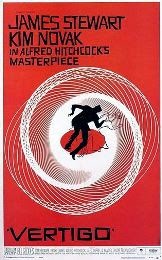
SECOND HELPINGS: Vertigo (1958)
There is something pleasing about watching a master at work. I originally rated this film back when I was in college. Re-watching it all these years later with my wife (who hadn’t seen it before) was a real treat. A modern comparison would be watching The Sixth Sense with someone who doesn’t know what’s coming. But that doesn’t do Vertigo any justice.
Because of how much time had passed between viewings, I had forgotten so many of the nuances that keep this film interesting. Vertigo is a film that creeps along its winding path at a slow but steady pace. There are very few of the ‘gotcha’ moments that fill contemporary suspense thrillers. In fact, Vertigo is almost purely suspense. The thrill comes at the end when you realize what you just experienced.
Hitchcock peppers his film with just enough peculiarity to prevent audiences from slipping into boredom. As events play out, you can’t help but wish things would move along quicker but at the same time you are engrossed by all the details that might be important. In the first half, you are constantly caught off guard by what comes next. The build-up is just so strange that it transfixes you. By the time we reach the mid-film climax, you are locked in and fully invested whatever the second half may bring.
Oh does the second half bring it! The audience is cast back into the murkiness of little details but without as much misdirection. Another revelation lets the audience in on a secret that tantalizes us as we wait for our protagonist to catch on. It’s emotionally and psychologically taxing, leaving us feeling almost as harried as the characters on screen.
I have admired James Stewart’s acting since I started taking movies seriously. He has always been such a believable presence on screen and that is very much the case in Vertigo. As an everyman ex-cop, audiences connect with Stewart because his reactions feel so genuine. His confusion, apprehension, nervousness, and frustration all echo what audiences feel while watching the film.
We don’t just watch the events of Vertigo; we experience them as if we were alongside Stewart. That kind of connection is rare and powerful. It is a doozy of a film that slowly ratchets up the tension while putting pieces together rather than yanking you from one frenetic scenario to the next. This is old-school suspense and it is a beautiful thing.
Original Rating: 4.5 out of 5
New Rating: 4.5 out of 5
Because of how much time had passed between viewings, I had forgotten so many of the nuances that keep this film interesting. Vertigo is a film that creeps along its winding path at a slow but steady pace. There are very few of the ‘gotcha’ moments that fill contemporary suspense thrillers. In fact, Vertigo is almost purely suspense. The thrill comes at the end when you realize what you just experienced.
Hitchcock peppers his film with just enough peculiarity to prevent audiences from slipping into boredom. As events play out, you can’t help but wish things would move along quicker but at the same time you are engrossed by all the details that might be important. In the first half, you are constantly caught off guard by what comes next. The build-up is just so strange that it transfixes you. By the time we reach the mid-film climax, you are locked in and fully invested whatever the second half may bring.
Oh does the second half bring it! The audience is cast back into the murkiness of little details but without as much misdirection. Another revelation lets the audience in on a secret that tantalizes us as we wait for our protagonist to catch on. It’s emotionally and psychologically taxing, leaving us feeling almost as harried as the characters on screen.
I have admired James Stewart’s acting since I started taking movies seriously. He has always been such a believable presence on screen and that is very much the case in Vertigo. As an everyman ex-cop, audiences connect with Stewart because his reactions feel so genuine. His confusion, apprehension, nervousness, and frustration all echo what audiences feel while watching the film.
We don’t just watch the events of Vertigo; we experience them as if we were alongside Stewart. That kind of connection is rare and powerful. It is a doozy of a film that slowly ratchets up the tension while putting pieces together rather than yanking you from one frenetic scenario to the next. This is old-school suspense and it is a beautiful thing.
Original Rating: 4.5 out of 5
New Rating: 4.5 out of 5
Saturday, August 16, 2014
The Wiz (1978)
As a middle-class white guy from the suburbs, I doubt that I can fully appreciate this film. I am certainly not a part of the main audience the filmmakers had in mind when bringing The Wiz from Broadway to the big screen. But the beauty of film is that there is (usually) something in the story or craftsmanship that everyone can enjoy, no matter how targeted the film is.
School teacher Dorothy Gale (Diana Ross) lives with her aunt and uncle in a Harlem apartment. The shy young woman seems to have no interest in leaving the place where she grew up, a quality for which she is teased by her family at Thanksgiving. When her dog Toto runs away into a snowstorm, Dorothy follows but gets caught up and whisked away to the Kingdom of Oz. In this dystopian urban environment, Dorothy makes friends with a scarecrow, tin man, and a lion, while making an enemy with the dangerous Wicked Witch of the East. Her only hope to get back home is to follow the yellow brick road to the Emerald City and seek the aid of the powerful Wizard of Oz.
The Wiz certainly is not my cup of tea and does not transcend well into my demographic background. That being said, there are a few interesting things going on here. Some of the sets are fascinating. Some scenes are shot on location in places like parking garages but the constructed sets are the best to examine. In The Wiz, the Kingdom of Oz is a mix of urban decay and wasteland. I caught myself questioning whether Oz should be so full of the familiar for Dorothy, but so was the 1939 classic version- Oz was farm fields and wilderness. Creating the dilapidated sets must have been difficult but rewarding for everyone involved.
The problems I perceive with The Wiz deal with time and age. Diana Ross clearly looks older than the 24-year-old character she portrays (she was in her mid-thirties at the time). I understand that the film needed a big-name with musical ability to headline this film, but Ross only works with a grain of salt too large for me to swallow. The inclusion of other African-American icons is useful. Not only does it round out the cast with notable names and faces (Michael Jackson, Nipsey Russell, and Ted Ross), but it brings real talent to the film.
I was impressed with Michael Jackson’s performance. Many singers cannot act but it is clear that the man was born to be an entertainer. As the brain-seeking scarecrow, his character’s message is targeted directly at urban African-American youth. While “don’t listen to them- you can be smart” is a good message, it is not one that has aged well. At the time this film was made, it probably seemed uplifting and inspirational, especially coming from Diana Ross and Michael Jackson. This far removed from the civil rights era, however, the message comes across as hokey and lacking substance.
Despite a number of laudable elements, the film as a whole has not aged well. While I just defended the film’s use of the familiar with its urban decay, this setting has a very dated feel now. Maybe it still resonates for those who live in and around decaying cities, but the sets, while looking good, fail to transcend time for me. This, along with the costumes and musical style, prevent The Wiz from standing the test of time like the 1939 version of The Wizard of Oz has. It wasn’t a wasted opportunity when it came out but it almost feels like one 30 plus years after the fact.
RATING: 2.5 out of 5
School teacher Dorothy Gale (Diana Ross) lives with her aunt and uncle in a Harlem apartment. The shy young woman seems to have no interest in leaving the place where she grew up, a quality for which she is teased by her family at Thanksgiving. When her dog Toto runs away into a snowstorm, Dorothy follows but gets caught up and whisked away to the Kingdom of Oz. In this dystopian urban environment, Dorothy makes friends with a scarecrow, tin man, and a lion, while making an enemy with the dangerous Wicked Witch of the East. Her only hope to get back home is to follow the yellow brick road to the Emerald City and seek the aid of the powerful Wizard of Oz.
The Wiz certainly is not my cup of tea and does not transcend well into my demographic background. That being said, there are a few interesting things going on here. Some of the sets are fascinating. Some scenes are shot on location in places like parking garages but the constructed sets are the best to examine. In The Wiz, the Kingdom of Oz is a mix of urban decay and wasteland. I caught myself questioning whether Oz should be so full of the familiar for Dorothy, but so was the 1939 classic version- Oz was farm fields and wilderness. Creating the dilapidated sets must have been difficult but rewarding for everyone involved.
The problems I perceive with The Wiz deal with time and age. Diana Ross clearly looks older than the 24-year-old character she portrays (she was in her mid-thirties at the time). I understand that the film needed a big-name with musical ability to headline this film, but Ross only works with a grain of salt too large for me to swallow. The inclusion of other African-American icons is useful. Not only does it round out the cast with notable names and faces (Michael Jackson, Nipsey Russell, and Ted Ross), but it brings real talent to the film.
I was impressed with Michael Jackson’s performance. Many singers cannot act but it is clear that the man was born to be an entertainer. As the brain-seeking scarecrow, his character’s message is targeted directly at urban African-American youth. While “don’t listen to them- you can be smart” is a good message, it is not one that has aged well. At the time this film was made, it probably seemed uplifting and inspirational, especially coming from Diana Ross and Michael Jackson. This far removed from the civil rights era, however, the message comes across as hokey and lacking substance.
Despite a number of laudable elements, the film as a whole has not aged well. While I just defended the film’s use of the familiar with its urban decay, this setting has a very dated feel now. Maybe it still resonates for those who live in and around decaying cities, but the sets, while looking good, fail to transcend time for me. This, along with the costumes and musical style, prevent The Wiz from standing the test of time like the 1939 version of The Wizard of Oz has. It wasn’t a wasted opportunity when it came out but it almost feels like one 30 plus years after the fact.
RATING: 2.5 out of 5
Wednesday, August 13, 2014
A Bug's Life (1998)
This is the kind of film you get when you combine groundbreaking technology with a story that’s been told a few too many times. There is nothing wrong with A Bug’s Life, really. In fact, it stands tall as one of the better non-musical films in Disney’s arsenal of family entertainment. And yet, in only Pixar’s second full-length computer-animated film, enough of the freshness we felt in Toy Story seems to have disappeared.
Flik is tired of being a follower, which is difficult for a member of an ant colony. His creativity, inventiveness, and unfortunate clumsiness make him stand out from his peers in a bad way. When his latest invention draws the ire of greedy and hostile grasshoppers, the colony is threatened with extinction. Flik sets off to assemble a team of warriors to defend his colony, but his creativity is put to the test when all he can recruit is a team of misfit circus bugs.
A Bug’s Life has plenty of beautiful animation to its credit. It also boasts a bunch of amusing and colorful characters. The story, however, is weak. A group of misfits band together to accomplish amazing feats? Yeah, I’ve seen about a dozen or more films with the exact same plot, especially with children’s films. Because the whole story structure is recycled, it’s not hard to predict most of how this film plays out.
As many authors will tell you, however, it is not about the destination, but the journey itself. Fortunately, this film has plenty of easily-digested ingredients. What the story lacks in freshness, Pixar makes up for with another dose of visual wonder. Toy Story gave us a look at what our homes look to our toys. A Bug’s Life takes us outside and even closer to the ground. The attention to detail and exaggeration of such micro details reminds me of Honey, I Shrunk the Kids. It is clear that Pixar was not about to rest on their laurels in this department, which is very encouraging.
Flik and the rest of the ants are pretty bland. The grasshoppers are mindless drones, save for their leader, Hopper (voiced by Kevin Spacey). He is intimidating at times but is understandably over-the-top with his rage. The real gems are the circus bugs. Each one has their own unique personality and that personality shows through in their physical appearance. While over-anthropomorphizing non-human characters became a problem in several computer-animated films released in the past decade, Pixar does it right here. Characters retain enough of their insect nature to be believable as bugs.
The story may leave you wanting more if you focus on it too much but if you pull back your magnifying glass just a little bit, there is no reason not to enjoy this film. Its quirks and jokes are good fun for all ages. It lacks the wow actor of Toy Story and some later Pixar films, but A Bug’s Life is certainly no sophomore slump.
RATING: 3.5 out of 5
Flik is tired of being a follower, which is difficult for a member of an ant colony. His creativity, inventiveness, and unfortunate clumsiness make him stand out from his peers in a bad way. When his latest invention draws the ire of greedy and hostile grasshoppers, the colony is threatened with extinction. Flik sets off to assemble a team of warriors to defend his colony, but his creativity is put to the test when all he can recruit is a team of misfit circus bugs.
A Bug’s Life has plenty of beautiful animation to its credit. It also boasts a bunch of amusing and colorful characters. The story, however, is weak. A group of misfits band together to accomplish amazing feats? Yeah, I’ve seen about a dozen or more films with the exact same plot, especially with children’s films. Because the whole story structure is recycled, it’s not hard to predict most of how this film plays out.
As many authors will tell you, however, it is not about the destination, but the journey itself. Fortunately, this film has plenty of easily-digested ingredients. What the story lacks in freshness, Pixar makes up for with another dose of visual wonder. Toy Story gave us a look at what our homes look to our toys. A Bug’s Life takes us outside and even closer to the ground. The attention to detail and exaggeration of such micro details reminds me of Honey, I Shrunk the Kids. It is clear that Pixar was not about to rest on their laurels in this department, which is very encouraging.
Flik and the rest of the ants are pretty bland. The grasshoppers are mindless drones, save for their leader, Hopper (voiced by Kevin Spacey). He is intimidating at times but is understandably over-the-top with his rage. The real gems are the circus bugs. Each one has their own unique personality and that personality shows through in their physical appearance. While over-anthropomorphizing non-human characters became a problem in several computer-animated films released in the past decade, Pixar does it right here. Characters retain enough of their insect nature to be believable as bugs.
The story may leave you wanting more if you focus on it too much but if you pull back your magnifying glass just a little bit, there is no reason not to enjoy this film. Its quirks and jokes are good fun for all ages. It lacks the wow actor of Toy Story and some later Pixar films, but A Bug’s Life is certainly no sophomore slump.
RATING: 3.5 out of 5
Monday, August 11, 2014
SECOND HELPINGS: Metropolis (1927)
The first time I saw this film was my sophomore or junior year in college. It was shown in a local independent movie theater and a man came in to perform a live score with the film on a Wurlitzer organ. I was awestruck. The scope of this film and the technical prowess behind it back up all the praise from industry insiders and cinephiles everywhere.
Perhaps I forgot some of the story details over the years, but watching it again recently has me wondering if I saw a different cut back in my college days. From doing a little research, I found that a new cut did come into existence around or just after I would have seen it in college because additional surviving footage was found. Specifically, the elements of the scientist creating his robot in order to destroy the city’s master, Fredersen, seemed new to me. If I recall correctly, in the version I saw in college Fredersen and the scientist worked together in order to crush Maria’s preaching to the underclass of workers.
If I did indeed see two unique cuts of the film, it speaks volumes to Fritz Lang and his crew that both are mesmerizing and equally great. I can’t even bring myself to make the argument that modern audiences might not think the special effects of Metropolis are a big deal, because I was captivated by them before I really began to understand and research film history.
Some viewers may have a hard time buying into the film’s hopelessly naïve ideal of unity between the working and ruling classes, and that is completely understandable. If you allow yourself to experience this film without reservations, however, you will be sucked in and feel like it is a triumph of the human spirit. It is, after all, a puff piece but it is packed with enough drama and action to keep you emotionally invested in the story and the characters.
Other viewers may be apprehensive of taking Metropolis in if they know of its history as a favorite film among Nazis, European socialists, and communists of pre-World War II Europe. I find this weirdly amusing because I see the film not as rich vs. poor but as party elite vs. their suppressed citizens. The upper class of Metropolis resembles almost exactly what society turns into under authoritarian socialist and communist rule. It makes you wonder if those Nazis and Soviets subconsciously longed for the unity at the ending or the division at the beginning of the film.
From a technical standpoint, Metropolis was a game changer. The inventiveness of some of the special effects is a testament to director Fritz Lang and his entire crew of filmmakers. The idealism of the story is worn boldly on Metropolis’s sleeve but I wouldn’t call it overly idealistic. Rather, it is idealism personified and committed to celluloid. For that, it is a powerful testament to the longing of the human spirit to be in balance and I respect that. It may not be as potently enjoyable as Gone with the Wind, but it comes darn close.
Original Rating: 4.75 out of 5
New Rating: 4.75 out of 5
Perhaps I forgot some of the story details over the years, but watching it again recently has me wondering if I saw a different cut back in my college days. From doing a little research, I found that a new cut did come into existence around or just after I would have seen it in college because additional surviving footage was found. Specifically, the elements of the scientist creating his robot in order to destroy the city’s master, Fredersen, seemed new to me. If I recall correctly, in the version I saw in college Fredersen and the scientist worked together in order to crush Maria’s preaching to the underclass of workers.
If I did indeed see two unique cuts of the film, it speaks volumes to Fritz Lang and his crew that both are mesmerizing and equally great. I can’t even bring myself to make the argument that modern audiences might not think the special effects of Metropolis are a big deal, because I was captivated by them before I really began to understand and research film history.
Some viewers may have a hard time buying into the film’s hopelessly naïve ideal of unity between the working and ruling classes, and that is completely understandable. If you allow yourself to experience this film without reservations, however, you will be sucked in and feel like it is a triumph of the human spirit. It is, after all, a puff piece but it is packed with enough drama and action to keep you emotionally invested in the story and the characters.
Other viewers may be apprehensive of taking Metropolis in if they know of its history as a favorite film among Nazis, European socialists, and communists of pre-World War II Europe. I find this weirdly amusing because I see the film not as rich vs. poor but as party elite vs. their suppressed citizens. The upper class of Metropolis resembles almost exactly what society turns into under authoritarian socialist and communist rule. It makes you wonder if those Nazis and Soviets subconsciously longed for the unity at the ending or the division at the beginning of the film.
From a technical standpoint, Metropolis was a game changer. The inventiveness of some of the special effects is a testament to director Fritz Lang and his entire crew of filmmakers. The idealism of the story is worn boldly on Metropolis’s sleeve but I wouldn’t call it overly idealistic. Rather, it is idealism personified and committed to celluloid. For that, it is a powerful testament to the longing of the human spirit to be in balance and I respect that. It may not be as potently enjoyable as Gone with the Wind, but it comes darn close.
Original Rating: 4.75 out of 5
New Rating: 4.75 out of 5
Friday, August 8, 2014
Mulan (1998)
Technically The Jungle Book was Disney’s first full-length animated film set on the continent of Asia, but Mulan is the animation giant’s first full-length visit to the Far East. As with many of Disney’s other ‘first visits,’ this film features unique and exotic visuals. Another unfortunate similarity to some of Disney’s recent films is a story that just doesn’t make the grade.
The Han dynasty is under siege by the vicious Hun tribes from the north. The Han emperor commands every family within the kingdom send forth one male in order to assemble a grand army to resist the invaders. Fa Mulan, a young woman, bucks social norms and risks her family’s honor by disguising herself as a man to take her aging father’s place on the field of battle. The spirits of her ancestors send Mushu, a wise-cracking tiny dragon, to guide Mulan on her quest of honor and bravery.
The ancient Chinese setting brings with it some lovely scenery, backdrops, and architecture. The animators even go to great lengths to animate certain characters, animals, and objects in a style similar to ancient Chinese art- lean, sharp angles, and vivid color contrast. Disney really learned their lesson from Oliver & Company; the quality of their 2-D animation has not disappointed me since. Yet, here again I must complain about the failings of the CAPS 2-D/3-D hybrid system. The scenes where it is used still do not look right.
Upon Mulan’s release, Disney hadn’t had a musical powerhouse since The Lion King. As a casual fan of Asian instrumental music, I had hope that Mulan’s songs and score might be a breath of fresh air. Instead, we’ve got zero memorable songs and minimal effort to make the incidental music new or invigorating. In fact, an early song where girls were dressing up to impress potential suitors is just weird. The girls are singing about being beautiful and marrying a man of stature to bring honor to their families. Maybe this was done to set up Mulan as different from the sheep-like mentality of her peers, but the song turned me off and even creeps me out to think that any young girl might find it catchy and sing it while playing with her dolls.
The character of Mulan has a lot in common with Ariel from The Little Mermaid. She’s spunky and isn’t satisfied with the status quo. Her story arc will likely earn the ire of diehard feminists much in the same way Ariel did, but this is a kid’s movie after all. The villain is intimidating and powerful but he lacks presence. All he does is ride his horse, wield a big sword, and growl a lot. Flat villains are weak villains. Mushu is like a sarcastic blend of Jiminy Cricket and the Genie from Aladdin, but nowhere near as endearing as either of them. The rest of the cast is forgettable, as the heavy drama of invasion and war drown out most of the humor.
Mulan’s rise against the sexism of ancient Chinese culture relates well to the modern Western world post-women’s lib. The Chinese devotion (some would call it obsession) to honor and family spirits does not translate well, which means roughly a third of Mulan’s story arc won’t faze audiences. Coupled with a lackluster cast and a no-luster soundtrack, Mulan suffers a fate similar to The Hunchback of Notre Dame and the live-action film The Curious Case of Benjamin Button; they’re all pretty to look at but ultimately boring to watch.
RATING: 3 out of 5
The Han dynasty is under siege by the vicious Hun tribes from the north. The Han emperor commands every family within the kingdom send forth one male in order to assemble a grand army to resist the invaders. Fa Mulan, a young woman, bucks social norms and risks her family’s honor by disguising herself as a man to take her aging father’s place on the field of battle. The spirits of her ancestors send Mushu, a wise-cracking tiny dragon, to guide Mulan on her quest of honor and bravery.
The ancient Chinese setting brings with it some lovely scenery, backdrops, and architecture. The animators even go to great lengths to animate certain characters, animals, and objects in a style similar to ancient Chinese art- lean, sharp angles, and vivid color contrast. Disney really learned their lesson from Oliver & Company; the quality of their 2-D animation has not disappointed me since. Yet, here again I must complain about the failings of the CAPS 2-D/3-D hybrid system. The scenes where it is used still do not look right.
Upon Mulan’s release, Disney hadn’t had a musical powerhouse since The Lion King. As a casual fan of Asian instrumental music, I had hope that Mulan’s songs and score might be a breath of fresh air. Instead, we’ve got zero memorable songs and minimal effort to make the incidental music new or invigorating. In fact, an early song where girls were dressing up to impress potential suitors is just weird. The girls are singing about being beautiful and marrying a man of stature to bring honor to their families. Maybe this was done to set up Mulan as different from the sheep-like mentality of her peers, but the song turned me off and even creeps me out to think that any young girl might find it catchy and sing it while playing with her dolls.
The character of Mulan has a lot in common with Ariel from The Little Mermaid. She’s spunky and isn’t satisfied with the status quo. Her story arc will likely earn the ire of diehard feminists much in the same way Ariel did, but this is a kid’s movie after all. The villain is intimidating and powerful but he lacks presence. All he does is ride his horse, wield a big sword, and growl a lot. Flat villains are weak villains. Mushu is like a sarcastic blend of Jiminy Cricket and the Genie from Aladdin, but nowhere near as endearing as either of them. The rest of the cast is forgettable, as the heavy drama of invasion and war drown out most of the humor.
Mulan’s rise against the sexism of ancient Chinese culture relates well to the modern Western world post-women’s lib. The Chinese devotion (some would call it obsession) to honor and family spirits does not translate well, which means roughly a third of Mulan’s story arc won’t faze audiences. Coupled with a lackluster cast and a no-luster soundtrack, Mulan suffers a fate similar to The Hunchback of Notre Dame and the live-action film The Curious Case of Benjamin Button; they’re all pretty to look at but ultimately boring to watch.
RATING: 3 out of 5
Subscribe to:
Posts (Atom)