I watched a lot of horror and slasher films as a teenager. When I watched Psycho for the first time in college, it didn’t register very much with my moderately desensitized brain. It wasn’t scary and I thought it was a little boring. A few years later, I watched it again. By that time I was paying more attention to the craft of filmmaking and appreciated older films much more. Needless to say, my rating took a hefty jump.
A few years after my second viewing, I had the opportunity to watch Psycho again with my wife. She does not like horror movies but I managed to convince her that she wouldn’t be grossed out. After all, this was a film from 1960. Just like Vertigo, this is a fun film to watch with someone who has never seen it and doesn’t know about any of its plot twists.
My wife found Norman Bates creepy but never overly dangerous. She managed to put two and two together before the surprise ending but that didn’t make it any less uncomfortable. That is where the power of Psycho rests- everything about it is unsettling. Both the content of the film and its structure are designed to disarm you and prevent you from slipping into an ordinary film-going experience.
It really takes a second or third viewing to appreciate the character of Norman Bates. Your first time watching, you are so bent on figuring out what is going on that you fail to see the finer details Anthony Perkins has on display. At first glance, his body movements, mannerisms, and glances throw off an unnerving vibe but only enough to make Norman seem a little off. Everybody knows somebody who seems a little off, which makes Norman odd but not too unusual. Repeat viewings reveal the subtle menace in his stance, eyes, and words. They chide us for not picking up on those signs before while simultaneously inviting us to relish in the evil residing within our antagonist.
If Norman Bates is only a little unnerving the first time you watch Psycho, the structure is apt to jar you outright. We start out the film following Marion Crane (Janet Leigh) on the lam after stealing money from her employer’s client. After getting to know her over the first half of the movie, our supposed main character is killed. Focus then shifts to Norman Bates as he tries to cover up Marion’s murder. While this tactic may not be as unique anymore, it had to be shocking at the time.
Also worth noting is that Psycho is a very realistic film, one in which many of the characters live morally gray lives. It’s up to you whether or not you want to feel sympathy for Marion. Was her stealing justified? Does her decision to redeem herself before her demise add any sympathy or is it inconsequential? Is her death punishment for her sins or is it a random tragedy? That’s just one character. There are several others in Psycho that get you asking all kinds of questions. That’s about as real as fiction can get right there.
Psycho may have been a victim to my immature mind back in college, but I have redeemed myself over the years, bumping it higher and higher with each subsequent viewing. Has it reached its peak on my rating scale? Only time will tell, but I cannot honestly envision it getting much higher. Psycho stands out as a classic film but even Norman Bates is no match for some of the films higher on my rating scale. Regardless, the film has finally reached my highest rating category- great.
Original Rating: 3 out of 5
Revised Rating: 3.75 out of 5
New Rating: 4 out of 5
Showing posts with label Alfred Hitchcock (Director). Show all posts
Monday, August 25, 2014
Monday, August 18, 2014
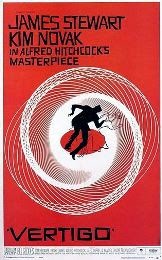
SECOND HELPINGS: Vertigo (1958)
There is something pleasing about watching a master at work. I originally rated this film back when I was in college. Re-watching it all these years later with my wife (who hadn’t seen it before) was a real treat. A modern comparison would be watching The Sixth Sense with someone who doesn’t know what’s coming. But that doesn’t do Vertigo any justice.
Because of how much time had passed between viewings, I had forgotten so many of the nuances that keep this film interesting. Vertigo is a film that creeps along its winding path at a slow but steady pace. There are very few of the ‘gotcha’ moments that fill contemporary suspense thrillers. In fact, Vertigo is almost purely suspense. The thrill comes at the end when you realize what you just experienced.
Hitchcock peppers his film with just enough peculiarity to prevent audiences from slipping into boredom. As events play out, you can’t help but wish things would move along quicker but at the same time you are engrossed by all the details that might be important. In the first half, you are constantly caught off guard by what comes next. The build-up is just so strange that it transfixes you. By the time we reach the mid-film climax, you are locked in and fully invested whatever the second half may bring.
Oh does the second half bring it! The audience is cast back into the murkiness of little details but without as much misdirection. Another revelation lets the audience in on a secret that tantalizes us as we wait for our protagonist to catch on. It’s emotionally and psychologically taxing, leaving us feeling almost as harried as the characters on screen.
I have admired James Stewart’s acting since I started taking movies seriously. He has always been such a believable presence on screen and that is very much the case in Vertigo. As an everyman ex-cop, audiences connect with Stewart because his reactions feel so genuine. His confusion, apprehension, nervousness, and frustration all echo what audiences feel while watching the film.
We don’t just watch the events of Vertigo; we experience them as if we were alongside Stewart. That kind of connection is rare and powerful. It is a doozy of a film that slowly ratchets up the tension while putting pieces together rather than yanking you from one frenetic scenario to the next. This is old-school suspense and it is a beautiful thing.
Original Rating: 4.5 out of 5
New Rating: 4.5 out of 5
Because of how much time had passed between viewings, I had forgotten so many of the nuances that keep this film interesting. Vertigo is a film that creeps along its winding path at a slow but steady pace. There are very few of the ‘gotcha’ moments that fill contemporary suspense thrillers. In fact, Vertigo is almost purely suspense. The thrill comes at the end when you realize what you just experienced.
Hitchcock peppers his film with just enough peculiarity to prevent audiences from slipping into boredom. As events play out, you can’t help but wish things would move along quicker but at the same time you are engrossed by all the details that might be important. In the first half, you are constantly caught off guard by what comes next. The build-up is just so strange that it transfixes you. By the time we reach the mid-film climax, you are locked in and fully invested whatever the second half may bring.
Oh does the second half bring it! The audience is cast back into the murkiness of little details but without as much misdirection. Another revelation lets the audience in on a secret that tantalizes us as we wait for our protagonist to catch on. It’s emotionally and psychologically taxing, leaving us feeling almost as harried as the characters on screen.
I have admired James Stewart’s acting since I started taking movies seriously. He has always been such a believable presence on screen and that is very much the case in Vertigo. As an everyman ex-cop, audiences connect with Stewart because his reactions feel so genuine. His confusion, apprehension, nervousness, and frustration all echo what audiences feel while watching the film.
We don’t just watch the events of Vertigo; we experience them as if we were alongside Stewart. That kind of connection is rare and powerful. It is a doozy of a film that slowly ratchets up the tension while putting pieces together rather than yanking you from one frenetic scenario to the next. This is old-school suspense and it is a beautiful thing.
Original Rating: 4.5 out of 5
New Rating: 4.5 out of 5
Monday, February 6, 2012
Rebecca** (1940)
As a fan of Alfred Hitchcock’s films, I am amazed that he never won an Oscar for directing. This Best Picture winner, his first Hollywood film, makes up for the Academy’s mistake and offers a superb look back at the growing talent of one of cinema’s all-time greats. While it may not be remembered as fondly as his later work in Hollywood, Rebecca is a taut thriller that fires on all narrative and technical cylinders.An unnamed woman (Joan Fontaine) narrates a tale of memories, love, and danger. Her early life as a paid companion for the rich and self-important Edythe Van Hopper (Florence Bates) is dull despite their many travels. Her life changes forever when she meets the dashing Maxim de Winter (Laurence Olivier). Despite recently becoming a widower, Maxim falls in love with the girl and they marry hastily. When Maxim brings his bride back to his family estate, called Manderley, the new Mrs. de Winter receives a cool reception from Mrs. Danvers, the housekeeper. Obsessed with her former mistress, Rebecca de Winter, Mrs. Danvers engages in unrelenting psychological torment to show her displeasure. This, compounded with the mysterious circumstances of Rebecca’s death, pushes the timid new Mrs. de Winter to the brink
By the end of this film, you may feel as if your brain is a yo-yo. Hitchcock and his filmmaking crew are constantly playing with the pace of the story. After getting taken off guard by the speed at which the unnamed main character and Maxim de Winter fall in love, the flow tapers off to accommodate the exposition necessary to introduce Manderley and its housekeeping staff. Mrs. Danvers’ game of cat-and-mouse with the new Mrs. de Winter provides plenty of false starts and genuine thrills. By the time the third reel rolls around, I was all but ready to be let off the ride. Sure enough, Hitchcock saves the best and biggest adrenaline plunge for last.
I am unsure where I stand on the story itself. While it happens, the pre-wedding romance feels too sudden, rushed and unlikely. It’s not until the payoff in the third reel where the events of the first reel become acceptable. You just don’t see this type of narrative styling anymore, which may make the film hard for some younger audiences to digest. I like that, at the end of the film, you are invited to think your way through the entire tale once more. It doesn’t command a second viewing per se, but Rebecca is the kind of film that changes after the first time you watch it. The first time through, your time is spent absorbing the details and information. A second viewing affords you the opportunity to marvel at the little details scattered about that only made sense at the end of your first viewing.
The danger of this film is that it does not fit the 50s and 60s Hitchcock formula. If you come into this film expecting that kind of payoff, you may find yourself confused. I know I was. Having seen several Hitchcock classics and the works of those who emulate him, I felt like I knew what to expect and, for a while, this attitude had me enjoying this film less than it deserved. All that was reversed when the film took another direction entirely. My mind was sufficiently blown and all respect was restored. Not all credit can be given to the director though. This is an adaptation of a novel, so kudos to the original writer are in order. But, a little research shows that the Production Code of the time required the story to be altered slightly, which actually improves the ending if you ask me.
This is a film that does just about everything right. Overexposure to the suspense and thriller sub-genres water down some of Rebecca’s impact, but there is no denying the powerhouse performances of the main characters. Laurence Olivier effortlessly runs the gamut of emotions, Joan Fontaine is perfectly naïve and high-strung, and Judith Anderson crafts one of the most psychologically twisted villains in big screen history. Add on top of this the cinematography (including some deep focus shots) and editing, and you’ve got a real winner. To think that Hitchcock got even better than this is awe-inspiring.
RATING: 4 out of 5
Thursday, July 19, 2007
Rear Window (1954)
Sadly, I think the cultural consciousness of this film has resulted in what seems like a low rating. Hitchcock is nothing short of amazing, but with all the references to Rear Window in TV and other movies, it just didn’t hold me like it was supposed to.Perhaps I need to watch it again, but knowing the ending without ever seeing the film really kills the momentum it tries to build throughout. Jimmy Stewart is terrific as always, playing a wheelchair bound photographer stuck in his apartment until he has his leg cast removed. It’s an interesting setup that allows him to spy on his neighbors for lack of anything better to do. Without the injury, he’d simply seem nosey and rude.
Most of the suspense and intrigue comes from what we see through Stewart’s telephoto lens. We can only really see what’s going on, leaving us as clueless as Stewart himself. His paranoid ponderings ask our questions for us and his suspicions launch us into a furor. At least they were meant to. Like I said, the cultural consciousness of the film has all but hampered its intention to thrill us.
All in all, a terrific piece of work.
RATING: 3.5 out of 5
Subscribe to:
Posts (Atom)