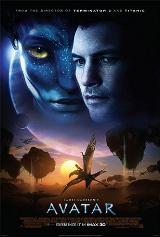
It takes a lot for me to see a film in 3D. To date, this is only the second film I have watched in the 3D format. For most films, 3D is little more than a gimmick and does nothing to enhance the story being told. As with Avatar, this film was made specifically with a 3D presentation in mind. Few films truly merit 3D presentation but Gravity is certainly one of them. I think the film could be just as powerful in 2D but seeing it in 3D provided an even more immersive experience.
Dr. Ryan Stone (Sandra Bullock) is a biomedical engineer on a space shuttle mission to make upgrades to some of the Hubble Space Telescope’s delicate instruments. During her spacewalk, a debris field caused by an exploded satellite overtakes Stone, her crew, and their shuttle. Stranded in orbit, Stone and Lt. Matt Kowalski (George Clooney) form a desperate plan to survive.
Some people complain about a lack of plot and I can see why they might think so but I think this may be because they do not share my understanding of what constitutes plot and story. As a story, Gravity is a powerhouse sequence of events. Precious little time is spent on wind-up. In your typical disaster blockbuster, probably a good thirty minutes would be spent introducing us to the characters. Here, we get maybe five minutes before things go haywire. Only after the spectacular opening sequence do we get to know the two surviving characters. Even then, we only learn about the shell-shocked Ryan because Kowalski knows he needs to distract her from the high probability that they are going to die.
But these forced conversations open us up to Ryan’s emotional journey, which I consider the film’s plot. She goes from being terrified and helpless, to mustering the courage to fight for her life, to finding the will to live. She clings to some things as she lets go of others. As in real life, people tend to find out who they are and what they’re made of during times of hardship. In 91 minutes, we witness one woman’s gut-wrenching transformation amidst the most extreme conditions. We get to know Ryan Stone at her worst and at her best and it is so, so powerful to experience.
Sandra Bullock carries this film on her shoulders and makes it look effortless. In reality, she was rigged to a wire harness in a box covered with LED lights. While you might think this film was shot in space or like on a parabolic flight like in Apollo 13, Bullock actually spent almost all of her time as if she were a marionette puppet, with the filmmakers controlling her every move. To be able to give up control of your body while delivering such a frenzied performance is astounding and, for me, this beats even her Oscar-winning performance in The Blind Side.
This movie looks like it was filmed in space. What is most astonishing is that all of the exterior spacewalk sequences are 100% digitally created, save for the actor’s superimposed faces inside the suits. Seeing pictures of the crew filming interior scenes is amazing because you realize just how much detail was added digitally. The end result is gorgeous and marks an enormous leap forward in visual effects. There are a few places where you can spot something that looks a little fake but at least 99% of this film looks real.
Not only does director Alfonso Cuarón create a nearly seamless visual extravaganza, he also employs the 3D format in a way that adds weight to the story being told. I don’t think 3D is essential to telling this story but the added depth of 3D really hammers home just how distant and isolated Stone and Kowalski are from Earth and anyone who can save them. It also enhances a few of the scenes where Stone is fumbling along the outside of a space station or spacecraft trying to achieve her goals. Cuarón likes to put long takes into his films and have the camera follow one character or drift between cameras for minutes on end without cutting. These sequences where the camera follows stone as she maneuvers around and along things are also heightened by 3D.
For a film firmly rooted in science and the here-and-now, Gravity has a moment that is open to debate. Late in the film there is a scene that can be interpreted two ways. It can either be scenes as a biological/physiological phenomenon or it can be interpreted in a spiritual way. I can’t say any more than I already have without spoiling things and I strongly encourage you to see this movie. I appreciated this scene and interpreted it the way my own way. Some may complain that this moment is something of a deus ex machine but I find it beautiful and touching. Without it, Stone’s journey is not complete.
Much like the Lord of the Rings movies did a decade before, Gravity sets a new standard by which to judge visual effects in films. It is also a hair-raising nail-biter that blasts your body with multiple adrenaline rushes. It took me at least an hour to recover from watching this film. All praise is due to Alfonso Cuarón for creating the technology necessary to will his vision onto the big screen. The fact that this film was a technical, critical, and box office triumph shows that Hollywood hasn’t completely run out of ideas yet. I can’t wait to see what Cuarón’s got in store for us next.
RATING: 4.25 out of 5
Showing posts with label Best Picture Nominee. Show all posts
Tuesday, April 21, 2015
Sunday, April 12, 2015
The Help* (2011)
This sassy, and at times catty, tale of black maids anonymously dishing the dirt on their wannabe Southern belle employers succeeds on a number of levels. It’s is simultaneously entertaining and thought-provoking. It also boasts snappy writing and terrific performances from the entire cast. The film may be a little heavy on the warm fuzzies but The Help is the kind of emotionally satisfying film you stop to watch when you come across it.
When Eugenia “Skeeter” Phelan (Emma Stone) returns home to Jackson, Mississippi from college with a degree but no husband, her local women’s circle try to take under their wing and find her a man. This is 1963 after all. Skeeter would rather focus on a career in writing, however, and lands a job for the local paper as a homemaking columnist. Not skilled in the subject herself, Skeeter seeks advice from Aibileen Clark (Viola Davis), the black maid working for a member of the local women’s circle. This leads the young and idealistic Skeeter to compile a collection of stories from the perspective of Aibileen and her fellow maids. Published anonymously, the book creates a firestorm of controversy and intrigue but the project’s anonymity only lasts so long.
The characters and performances in this film are wonderful. Many characters could have been very cookie-cutter in nature but they aren’t. All of the black maids have personality. They are not all bitter towards their white employers, nor are they pushovers either. Viola Davis and Octavia Spencer give exhausting performances that showcase the emotional duality of working a job where you are treated as if you don’t exist half the time and less than a person the other half.
Bryce Dallas Howard is equally excellent as the scheming racist ringleader of the town’s young women. She could have been your stereotypical Southern belle who doesn’t understand the depths of her racism but she is so much more. Here is a power hungry woman bent on wielding whatever influence she has to keep those she finds inferior on a lower rung of the food chain. In today’s era, she would be a nightmarish politician.
Emma Stone’s character, though the facilitator of the whole thing, is actually the weakest in the entire story. She is very much your stereotypical young adult Baby Boomer full of idealism about social change and challenging the norm. Without the stellar mix of characters driving the story around her, The Help would descend into cliché. Had the story focused too much on Skeeter and put her up on a pedestal for her boldness in writing the book, audiences would have gagged. White liberals have trumpeted their work for minorities for decades so another dose of ‘see, we care!’ would have left everyone wanting more.
The Help does leave you wanting more though. It leaves you wanting more movies with acting as fabulous as you find here. This film shows that women in Hollywood do not have to settle for being a second-tier attraction. With the right story and the right talent, women can carry a film that matters and moves you. The Help does both. It may give in to a few too many heartwarming moments for its own good but we’ve almost come to expect that from movies about Baby Boomers and social justice. If you like great acting and uplifting stories, this one’s got them both in spades.
RATING: 3.75 out of 5
When Eugenia “Skeeter” Phelan (Emma Stone) returns home to Jackson, Mississippi from college with a degree but no husband, her local women’s circle try to take under their wing and find her a man. This is 1963 after all. Skeeter would rather focus on a career in writing, however, and lands a job for the local paper as a homemaking columnist. Not skilled in the subject herself, Skeeter seeks advice from Aibileen Clark (Viola Davis), the black maid working for a member of the local women’s circle. This leads the young and idealistic Skeeter to compile a collection of stories from the perspective of Aibileen and her fellow maids. Published anonymously, the book creates a firestorm of controversy and intrigue but the project’s anonymity only lasts so long.
The characters and performances in this film are wonderful. Many characters could have been very cookie-cutter in nature but they aren’t. All of the black maids have personality. They are not all bitter towards their white employers, nor are they pushovers either. Viola Davis and Octavia Spencer give exhausting performances that showcase the emotional duality of working a job where you are treated as if you don’t exist half the time and less than a person the other half.
Bryce Dallas Howard is equally excellent as the scheming racist ringleader of the town’s young women. She could have been your stereotypical Southern belle who doesn’t understand the depths of her racism but she is so much more. Here is a power hungry woman bent on wielding whatever influence she has to keep those she finds inferior on a lower rung of the food chain. In today’s era, she would be a nightmarish politician.
Emma Stone’s character, though the facilitator of the whole thing, is actually the weakest in the entire story. She is very much your stereotypical young adult Baby Boomer full of idealism about social change and challenging the norm. Without the stellar mix of characters driving the story around her, The Help would descend into cliché. Had the story focused too much on Skeeter and put her up on a pedestal for her boldness in writing the book, audiences would have gagged. White liberals have trumpeted their work for minorities for decades so another dose of ‘see, we care!’ would have left everyone wanting more.
The Help does leave you wanting more though. It leaves you wanting more movies with acting as fabulous as you find here. This film shows that women in Hollywood do not have to settle for being a second-tier attraction. With the right story and the right talent, women can carry a film that matters and moves you. The Help does both. It may give in to a few too many heartwarming moments for its own good but we’ve almost come to expect that from movies about Baby Boomers and social justice. If you like great acting and uplifting stories, this one’s got them both in spades.
RATING: 3.75 out of 5
Saturday, March 7, 2015
Ray* (2004)
When I watched this film with my wife, it was the first biopic I watched in over a year (no, Magic Mike doesn’t count) and the first good biopic I had seen in almost two years. Watching Ray reminded me that biopics can be more than just Oscar bait. The filmmakers certainly sugarcoat Ray Charles’s life toward the end of the film but they do not shy away from dragging us through the mud and muck that Charles endured. Disability, racism, womanizing, and addiction haunted Ray Charles through much of his life but his ability to overcome most of his personal demons is every bit as inspiring as the talent he possessed.
The film starts out when Ray Charles is a young boy growing up on a sharecropping plantation. As if growing up in poverty and watching his brother drown in freak accident weren’t enough, Ray started losing his sight at just seven years old. Determined to prevent her son from accepting a life of helplessness, Ray’s mother forces him to adapt to his new world and trains him to listen and feel his way around a space. Upon discovering a knack for the piano, Ray surprises many on his way to the top of the music business. Blindness may not hold him back but other demons haunt him every step of the way.
Like most biopics, Ray is almost always focused exclusively on its titular character. We learn and see very little that does not take place within the immediate vicinity of Ray Charles. It’s a limiting perspective but also a necessary one when a film tries to cover as much time as Ray does. What the film lacks in introspection from its supporting cast is made up for in Jamie Foxx’s performance.
One of the biggest gripes against biopics comes when the lead actor or actress doesn’t look enough like the film’s subject. It can be even more trouble for musical biopics when characters cannot bring the stage presence or signing ability of the film’s subject. Neither is the case here, as Jamie Foxx looks, moves, sings, and howls like the late Ray Charles. Foxx benefits by having half of his face covered by Ray’s signature dark sunglasses most of the time but looking the part is only part of making a biopic work. Foxx is believable and infuses his character with humanity, both the good and bad parts.
If you know little about Ray Charles’s life beyond his music, this movie will probably leave you thinking a little less of him. Yes, it shows how Charles overcame a number of obstacles in his life but it also shows his stubborn unwillingness to give up a few too. This is not the squeaky-clean, Diet Pepsi-hawking Ray Charles you know from TV but biopics are all about showing a little dirt and a few rough edges. Had the whole film had been as hagiographic as the on-screen epilogue (basically saying he was a wonderful man the rest of his life), audiences would have revolted and the film would have been a disaster.
Overall, Ray is a very strong film built on Jamie Foxx’s exceptional performance. There are a few odd, almost trippy visions that Charles has that don’t make a lot of sense and are never fully explained. Most of them are designed to send us into a flashback but it’s a very weird way to segue through an otherwise normal dramatic film. Foxx alone makes the film worth seeing but tidying up a few of the other pieces would have nudged this film into my ‘great’ category.
RATING: 3.75 out of 5
The film starts out when Ray Charles is a young boy growing up on a sharecropping plantation. As if growing up in poverty and watching his brother drown in freak accident weren’t enough, Ray started losing his sight at just seven years old. Determined to prevent her son from accepting a life of helplessness, Ray’s mother forces him to adapt to his new world and trains him to listen and feel his way around a space. Upon discovering a knack for the piano, Ray surprises many on his way to the top of the music business. Blindness may not hold him back but other demons haunt him every step of the way.
Like most biopics, Ray is almost always focused exclusively on its titular character. We learn and see very little that does not take place within the immediate vicinity of Ray Charles. It’s a limiting perspective but also a necessary one when a film tries to cover as much time as Ray does. What the film lacks in introspection from its supporting cast is made up for in Jamie Foxx’s performance.
One of the biggest gripes against biopics comes when the lead actor or actress doesn’t look enough like the film’s subject. It can be even more trouble for musical biopics when characters cannot bring the stage presence or signing ability of the film’s subject. Neither is the case here, as Jamie Foxx looks, moves, sings, and howls like the late Ray Charles. Foxx benefits by having half of his face covered by Ray’s signature dark sunglasses most of the time but looking the part is only part of making a biopic work. Foxx is believable and infuses his character with humanity, both the good and bad parts.
If you know little about Ray Charles’s life beyond his music, this movie will probably leave you thinking a little less of him. Yes, it shows how Charles overcame a number of obstacles in his life but it also shows his stubborn unwillingness to give up a few too. This is not the squeaky-clean, Diet Pepsi-hawking Ray Charles you know from TV but biopics are all about showing a little dirt and a few rough edges. Had the whole film had been as hagiographic as the on-screen epilogue (basically saying he was a wonderful man the rest of his life), audiences would have revolted and the film would have been a disaster.
Overall, Ray is a very strong film built on Jamie Foxx’s exceptional performance. There are a few odd, almost trippy visions that Charles has that don’t make a lot of sense and are never fully explained. Most of them are designed to send us into a flashback but it’s a very weird way to segue through an otherwise normal dramatic film. Foxx alone makes the film worth seeing but tidying up a few of the other pieces would have nudged this film into my ‘great’ category.
RATING: 3.75 out of 5
Saturday, January 24, 2015
Les Misérables* (2012)
Even though I was involved with my college’s student theatre group for four years, I have never considered myself a theatre person. I have no burning desire to see a Broadway show and I do not have enough experience with stage productions to form any preconceived notions of what a good movie-musical should look or sound like. I think the absence any personal stylistic biases helps me enjoy Les Misérables more objectively and fully than some of its critics.
This story is far too long and complex to summarize in one paragraph but I will do my best. After a moral conviction, parolee Jean Valjean (Hugh Jackman) reforms his life but, in doing so, violates his parole. An act of mercy exposes Valjean’s identity to the ruthlessly legalistic lawman Javert (Russell Crowe), who makes it his personal mission to hunt Valjean down. Years later, Valjean and the prostitute’s daughter in his care are caught up in the clamor of proposed revolution. Try as Valjean might, the lovely Cosette (Amanda Seyfried) falls in love with a charming wannabe revolutionary. Between protests in the streets and Javert hot on their heels, Valjean tries his best to maintain his freedom while providing a life of opportunity for his adoptive daughter.
Even at two and a half hours, cramming this much story together makes things feel more than a little rushed at times. Because of this, a lot of character development is either stunted or missing altogether. I would have particularly appreciated a little more focus on Javert. I get the stereotypical hardcore lawman bit but we could use a little more time to see his conflict growing as he considers how Jean Valjean’s selfless acts conflict with his beliefs that law and morality are equivalent.
Unlike some, I love the decision to have the cast singing live to the camera rather than lip syncing over a pre-recorded track. Les Misérables takes the audience into the gritty, dirty streets of impoverished 19th Century Paris. Using raw vocals fits the raw setting we find our characters in. It also lets the actors and actresses act through their singing instead of trying to make their expressions match the tone of voice on a recording. This is effective on pretty much all of Hugh Jackman’s songs and also very powerful for Anne Hathaway’s solo number “I Dreamed a Dream.” These pretty Broadway songs are made far more moving this way, helping this film stand out amongst its movie-musical peers for me.
I haven’t exactly followed Hugh Jackman’s career outside of the X-Men films but from all that he does here, I have to assume this is the performance of his career to date. This story requires a strong performance out of Valjean and that is precisely what Jackman delivers. We see anger, fear, determination, and tenderness that suck you in and break your heart by the end of it all. You get the sense that this role is something of a dream come true for him because he clearly gives it his all.
As supporting characters, Anne Hathaway delivers a powerful performance of desperation and Amanda Seyfried performs admirably as the love-struck Cosette. Russell Crowe is certainly the film’s weakest link in terms of singing ability but the man does play a good villain. Les Mis feels the most disjointed during the scenes featuring Sacha Baron Cohen and Helena Bonham Carter as the Thénardiers. Everything about them feels like it belongs in a separate world from the rest of the film. A tremendous amount of drama and realism abounds in Les Mis but the Thénardiers are just so wacky and bizarre that it feels very obviously like a comic relief sideshow. These characters serve an important purpose to the overall story but it is clear that Broadway yukked these folks up a little too much from the source material.
Combine this largely talented cast with beautiful but not showy costumes and splendid location and studio sets and it really is like you are there. In addition to the live singing, director Tom Hooper lets the camera follow characters through sets more, avoiding the stagy feel of most movie-musicals. Despite a few visual effects that fail to impress, Les Misérables has more than enough going right for it to make it a film that commands a large screen. If you did not catch this one in theaters, it is your loss. I went to see it because my wife loves the musical but I left the theater a fan.
RATING: 4 out of 5
This story is far too long and complex to summarize in one paragraph but I will do my best. After a moral conviction, parolee Jean Valjean (Hugh Jackman) reforms his life but, in doing so, violates his parole. An act of mercy exposes Valjean’s identity to the ruthlessly legalistic lawman Javert (Russell Crowe), who makes it his personal mission to hunt Valjean down. Years later, Valjean and the prostitute’s daughter in his care are caught up in the clamor of proposed revolution. Try as Valjean might, the lovely Cosette (Amanda Seyfried) falls in love with a charming wannabe revolutionary. Between protests in the streets and Javert hot on their heels, Valjean tries his best to maintain his freedom while providing a life of opportunity for his adoptive daughter.
Even at two and a half hours, cramming this much story together makes things feel more than a little rushed at times. Because of this, a lot of character development is either stunted or missing altogether. I would have particularly appreciated a little more focus on Javert. I get the stereotypical hardcore lawman bit but we could use a little more time to see his conflict growing as he considers how Jean Valjean’s selfless acts conflict with his beliefs that law and morality are equivalent.
Unlike some, I love the decision to have the cast singing live to the camera rather than lip syncing over a pre-recorded track. Les Misérables takes the audience into the gritty, dirty streets of impoverished 19th Century Paris. Using raw vocals fits the raw setting we find our characters in. It also lets the actors and actresses act through their singing instead of trying to make their expressions match the tone of voice on a recording. This is effective on pretty much all of Hugh Jackman’s songs and also very powerful for Anne Hathaway’s solo number “I Dreamed a Dream.” These pretty Broadway songs are made far more moving this way, helping this film stand out amongst its movie-musical peers for me.
I haven’t exactly followed Hugh Jackman’s career outside of the X-Men films but from all that he does here, I have to assume this is the performance of his career to date. This story requires a strong performance out of Valjean and that is precisely what Jackman delivers. We see anger, fear, determination, and tenderness that suck you in and break your heart by the end of it all. You get the sense that this role is something of a dream come true for him because he clearly gives it his all.
As supporting characters, Anne Hathaway delivers a powerful performance of desperation and Amanda Seyfried performs admirably as the love-struck Cosette. Russell Crowe is certainly the film’s weakest link in terms of singing ability but the man does play a good villain. Les Mis feels the most disjointed during the scenes featuring Sacha Baron Cohen and Helena Bonham Carter as the Thénardiers. Everything about them feels like it belongs in a separate world from the rest of the film. A tremendous amount of drama and realism abounds in Les Mis but the Thénardiers are just so wacky and bizarre that it feels very obviously like a comic relief sideshow. These characters serve an important purpose to the overall story but it is clear that Broadway yukked these folks up a little too much from the source material.
Combine this largely talented cast with beautiful but not showy costumes and splendid location and studio sets and it really is like you are there. In addition to the live singing, director Tom Hooper lets the camera follow characters through sets more, avoiding the stagy feel of most movie-musicals. Despite a few visual effects that fail to impress, Les Misérables has more than enough going right for it to make it a film that commands a large screen. If you did not catch this one in theaters, it is your loss. I went to see it because my wife loves the musical but I left the theater a fan.
RATING: 4 out of 5
Saturday, January 17, 2015
Babe* (1995)
Here is one of those rare children’s / family films that just nails it. It’s cute but not sappy, simple but not stupid, and heartwarming without inducing your gag reflex. I don’t know that it deserved to be nominated for Best Picture, but Babe is a charming little puff piece that hasn’t lost much, if any, of its magic over the last two decades.
The runt of the litter and unwanted by his pork farm owners, he is offered up as the prize for a weight-guessing game at a local carnival. After guessing correctly, Farmer Hoggett (James Cromwell) brings him home to his small countryside farm. Some of the barnyard and household animals embrace him while others want nothing to do with him. Adopted by a family of sheep dogs, Babe’s spunk and desire to take up the “family” business catches the eye of Farmer Hoggett, leading him to defy convention and risk humiliation by registering Babe in a sheep-herding contest.
Live-action movies with talking animals strike me as risky business. You can do anything you want with animation, and there is a lot of leeway when the film is just about talking animals. Films like Babe, which set talking animals against a very real-world setting including humans have to be done just right. The animals have to act like animals and they can’t be too smart or the humans too dumb. Credit is due both the filmmakers and undoubtedly the author of the book the film is based on for fashioning a slate of animal and human characters that walk this tightrope act with ease.
Plain and simple, films like this live and die by the animal performances. To bring this film to life, the director, cinematographer, and animal trainers all have to be on the same page. The animals hit their marks (though I can imagine multiple takes required for each scene) and the cinematography captures the animal movements from angles and in lighting that complete the illusion.
Praise is also due to the people behind giving voices to the animal characters. All of the voice characterizations are terrific because the voice textures blend with the animal actions in such a way that you have no problem believing that these animals actually possess the personalities being expressed. The visual effects department also does a flawless job of making each animal look as if it is actually delivering the lines without defying animal anatomy. Between subtle mouth movements via animatronics in production and computer effects in post-production, the filmmakers make talking animals look plausible, eliminating most of the objections our brains would normally raise.
I think the only thing in this film that dates it is when Farmer Hoggett and his wife receive a fax machine as a gift to help keep in touch with their city-dwelling children and grandkids. Otherwise the film exists within a world insulated from changes in fashion and culture. You can watch Babe today and still presume it to be set at a modern quaint off-the-beaten-path English farm whose owners eschew fancy technology. Its setting is as close to timeless as you can hope for in a family friendly film and it comes with a whole lot of charm. This will be one to share with the kids and grandkids someday.
RATING: 3.75 out of 5
The runt of the litter and unwanted by his pork farm owners, he is offered up as the prize for a weight-guessing game at a local carnival. After guessing correctly, Farmer Hoggett (James Cromwell) brings him home to his small countryside farm. Some of the barnyard and household animals embrace him while others want nothing to do with him. Adopted by a family of sheep dogs, Babe’s spunk and desire to take up the “family” business catches the eye of Farmer Hoggett, leading him to defy convention and risk humiliation by registering Babe in a sheep-herding contest.
Live-action movies with talking animals strike me as risky business. You can do anything you want with animation, and there is a lot of leeway when the film is just about talking animals. Films like Babe, which set talking animals against a very real-world setting including humans have to be done just right. The animals have to act like animals and they can’t be too smart or the humans too dumb. Credit is due both the filmmakers and undoubtedly the author of the book the film is based on for fashioning a slate of animal and human characters that walk this tightrope act with ease.
Plain and simple, films like this live and die by the animal performances. To bring this film to life, the director, cinematographer, and animal trainers all have to be on the same page. The animals hit their marks (though I can imagine multiple takes required for each scene) and the cinematography captures the animal movements from angles and in lighting that complete the illusion.
Praise is also due to the people behind giving voices to the animal characters. All of the voice characterizations are terrific because the voice textures blend with the animal actions in such a way that you have no problem believing that these animals actually possess the personalities being expressed. The visual effects department also does a flawless job of making each animal look as if it is actually delivering the lines without defying animal anatomy. Between subtle mouth movements via animatronics in production and computer effects in post-production, the filmmakers make talking animals look plausible, eliminating most of the objections our brains would normally raise.
I think the only thing in this film that dates it is when Farmer Hoggett and his wife receive a fax machine as a gift to help keep in touch with their city-dwelling children and grandkids. Otherwise the film exists within a world insulated from changes in fashion and culture. You can watch Babe today and still presume it to be set at a modern quaint off-the-beaten-path English farm whose owners eschew fancy technology. Its setting is as close to timeless as you can hope for in a family friendly film and it comes with a whole lot of charm. This will be one to share with the kids and grandkids someday.
RATING: 3.75 out of 5
Saturday, January 10, 2015
Scent of a Woman* (1992)
For years I avoided watching this film because the title sounded like a sappy romantic flick. Only after I decided to grin and bear it, because my wife wanted to see it, did I learn how wrong I was. It may not be a chick flick, or even a romance for that matter, but there is still a sap factor to Scent of a Woman that holds it back.
Prep school student Charlie Simms (Chris O’Donnell) takes a caretaker job over Thanksgiving break to earn money for a trip home for Christmas. He gets more than he bargains for when the man he is hired to watch, retired Lieutenant Colonel Frank Slade (Al Pacino), drafts him into a road trip to New York City. The blind military man is full of anger, and at times finds himself at odds with his caretaker, but Slade and Simms find a kind of rapport that enables each of them to help the other through difficult situations.
This film serves as a vehicle for showcasing Al Pacino’s acting chops, end of story. Like many other Hollywood films before it, Scent of a Woman is a one man show without being a true solo performance. Pacino is fierce with his characters rage yet completely watchable. I’m not sure what blind advocates though of his performance but he seems to do well enough in playing a blind man. His line of sight never gets too focused on what a non-blind person would.
While Chris O’Donnell’s character is actually the main character of this story, he is completely overshadowed by his costar. The way the script is written, it almost feels like this was by design, because you only remember Pacino’s performance. Enjoyable as the film may be, it would have been nice to have a stronger actor playing Charlie Simms. O’Donnell has a few shining moments but he comes nowhere close to standing toe-to-toe with Pacino. I don’t know what young actor could have pulled it off but O’Donnell doesn’t convince me.
Scent of a Woman has some charm and plenty of heartwarming and uplifting moments but something feels a little paint-by-numbers. Pacino’s Oscar is certainly earned here but when one performance overpowers everything else, it takes something away from the film as a whole. This film may have something to say about honor and values but it doesn’t quite say enough to be the kind of film that people will remember forever. If it weren’t for Pacino, this film probably wouldn’t be remembered at all.
RATING: 3.5 out of 5
Prep school student Charlie Simms (Chris O’Donnell) takes a caretaker job over Thanksgiving break to earn money for a trip home for Christmas. He gets more than he bargains for when the man he is hired to watch, retired Lieutenant Colonel Frank Slade (Al Pacino), drafts him into a road trip to New York City. The blind military man is full of anger, and at times finds himself at odds with his caretaker, but Slade and Simms find a kind of rapport that enables each of them to help the other through difficult situations.
This film serves as a vehicle for showcasing Al Pacino’s acting chops, end of story. Like many other Hollywood films before it, Scent of a Woman is a one man show without being a true solo performance. Pacino is fierce with his characters rage yet completely watchable. I’m not sure what blind advocates though of his performance but he seems to do well enough in playing a blind man. His line of sight never gets too focused on what a non-blind person would.
While Chris O’Donnell’s character is actually the main character of this story, he is completely overshadowed by his costar. The way the script is written, it almost feels like this was by design, because you only remember Pacino’s performance. Enjoyable as the film may be, it would have been nice to have a stronger actor playing Charlie Simms. O’Donnell has a few shining moments but he comes nowhere close to standing toe-to-toe with Pacino. I don’t know what young actor could have pulled it off but O’Donnell doesn’t convince me.
Scent of a Woman has some charm and plenty of heartwarming and uplifting moments but something feels a little paint-by-numbers. Pacino’s Oscar is certainly earned here but when one performance overpowers everything else, it takes something away from the film as a whole. This film may have something to say about honor and values but it doesn’t quite say enough to be the kind of film that people will remember forever. If it weren’t for Pacino, this film probably wouldn’t be remembered at all.
RATING: 3.5 out of 5
Thursday, September 25, 2014
The Exorcist* (1973)
Going into this film, I knew it was renowned for being intense and scary. I had also seen numerous references and parodies of key scenes in other movies and on TV. What is amazing is that none of this knowledge came to the front of my brain while watching The Exorcist. That speaks to just how strong this film is.
Washington D.C. native Chris McNeil (Ellen Burstyn) notices increasingly strange behavior from her daughter Regan (Linda Blair). Fits of violence, swearing, and more lead Chris to seek medical help for the girl. When the doctors come up empty-handed, exorcism is suggested. The task is given to a duo of priests-one a weak-in-faith young man (Jason Miller) and the other much older and with personal experience with the supernatural (Max von Sydow). The quest to heal Regan pushes all parties involved to the breaking point.
This movie pushed me pretty far as well. It starts off slow and confusing (the elder priest is in the Middle East and finds relics of a demon he cast out of another person long ago) but the rest of the film is fantastic. Regan doesn’t pull a sudden 180 on us. Her possession is gradual, ratcheting up the creepiness a little bit at a time. Some modern viewers may balk at her possession stemming from experimenting with a Ouija board but I am fine with it. Getting no explanation for the possession would be scarier but also harder to digest.
Linda Blair deserves every word of praise she ever received for her performance. To be perfectly honest, it’s a wonder she wasn’t permanently scarred emotionally and psychologically from making this film because she does many things that I cannot imagine asking a child to do for a film. I know it is not her voice saying such vile things during the exorcism sequence but it all looks legit. The way she throws her body around and contorts her face is jaw-dropping.
This film impacts an audience because (as I’ve said numerous times before) human beings are hardwired to be troubled by seeing children in danger. The Exorcist resonates especially with me as a parent. I would do anything to protect my little girl, so I can understand the fear and anxiety exhibited by Burstyn’s mother character.
The underlying battle of science vs. faith is intriguing. The young priest called on to help Regan has been taught by the church that demonic possession is not real and just a combination of psychological and physiological issues. Experience tells the elder priest otherwise, making it interesting to watch Miller’s character confront something he was told not to believe in. It raises the question- are advancements in science and medicine blocking mankind from believing in the spiritual forces of evil?
You’ve seen the parodies, the references, and allusions. Even if you’ve never seen this film before, chances are that you know what ultimately happens. However, The Exorcist is a powerful piece of evidence to the saying ‘it’s not about the destination; it’s about the journey.’ No matter how prepared you think you are to watch this film, it will catch you off guard. The Exorcist is one of the most genuinely unsettling films I have ever watched. For me, that says a lot.
RATING: 4.25 out of 5
Washington D.C. native Chris McNeil (Ellen Burstyn) notices increasingly strange behavior from her daughter Regan (Linda Blair). Fits of violence, swearing, and more lead Chris to seek medical help for the girl. When the doctors come up empty-handed, exorcism is suggested. The task is given to a duo of priests-one a weak-in-faith young man (Jason Miller) and the other much older and with personal experience with the supernatural (Max von Sydow). The quest to heal Regan pushes all parties involved to the breaking point.
This movie pushed me pretty far as well. It starts off slow and confusing (the elder priest is in the Middle East and finds relics of a demon he cast out of another person long ago) but the rest of the film is fantastic. Regan doesn’t pull a sudden 180 on us. Her possession is gradual, ratcheting up the creepiness a little bit at a time. Some modern viewers may balk at her possession stemming from experimenting with a Ouija board but I am fine with it. Getting no explanation for the possession would be scarier but also harder to digest.
Linda Blair deserves every word of praise she ever received for her performance. To be perfectly honest, it’s a wonder she wasn’t permanently scarred emotionally and psychologically from making this film because she does many things that I cannot imagine asking a child to do for a film. I know it is not her voice saying such vile things during the exorcism sequence but it all looks legit. The way she throws her body around and contorts her face is jaw-dropping.
This film impacts an audience because (as I’ve said numerous times before) human beings are hardwired to be troubled by seeing children in danger. The Exorcist resonates especially with me as a parent. I would do anything to protect my little girl, so I can understand the fear and anxiety exhibited by Burstyn’s mother character.
The underlying battle of science vs. faith is intriguing. The young priest called on to help Regan has been taught by the church that demonic possession is not real and just a combination of psychological and physiological issues. Experience tells the elder priest otherwise, making it interesting to watch Miller’s character confront something he was told not to believe in. It raises the question- are advancements in science and medicine blocking mankind from believing in the spiritual forces of evil?
You’ve seen the parodies, the references, and allusions. Even if you’ve never seen this film before, chances are that you know what ultimately happens. However, The Exorcist is a powerful piece of evidence to the saying ‘it’s not about the destination; it’s about the journey.’ No matter how prepared you think you are to watch this film, it will catch you off guard. The Exorcist is one of the most genuinely unsettling films I have ever watched. For me, that says a lot.
RATING: 4.25 out of 5
Tuesday, July 22, 2014
SECOND HELPINGS: Citizen Kane* (1941)
Is this film really the granddaddy of them all? For me the answer is no, but Citizen Kane did elevate its stature on my ratings list this latest time through. I’ve seen it three or four times now but this is the first I’ve taken it in for quite some time. There is a lot of excellent stuff in this film to lend credence to its unofficial status as the greatest American film of all time but I can pinpoint at least one thing that holds it back.
Technically speaking, this film is a masterpiece. Music, cinematography, direction, structure- it’s all there and it all works astoundingly well. The acting is sharp and a testament to Orson Welles’s attention to detail. He demands daring shots, scandalous content, and an edginess rarely seen in cinema. In short, Citizen Kane is on a completely separate level from just about everything that came before it.
The only problem with the film? Partway through the film, Charles Foster Kane becomes a very unlikeable man. He is corrupted and consumed by the very things he set out to defy. As masterful as it all is, it is hard to continue caring about someone who pulls such a harsh 180. There is no final-reel turnaround which, while possibly being more realistic, saps the fun out of what was building up to be a through-and-through triumph of good. Maybe it’s all intentional and just part of the unparalleled genius of Orson Welles. Perhaps future viewings will elucidate that for me.
Hollywood was too cowardly to embrace Citizen Kane when it came out because it was loosely based on the life of William Randolph Hearst. At the time of its release, Hearst was still the most powerful name in print media and was prepared to ruin anyone who came out in support of the film. After Hearst died and Citizen Kane ran on television in the 1950s, its stature was raised.
I think that some of the gushing fervor for Kane was initially a release of pent-up admiration by those who were too afraid of Hearst to get behind the film upon its release. Over time, this love became institutionalized among film historians and teachers of motion picture making. That’s not to say it wasn’t warranted. Orson Welles (in his early years at least) was a national treasure. He was a powerful force in theatre and radio. That Citizen Kane was Welles’s first film boggles the mind because he was an outsider and didn’t know much about how to make a film, yet he created something unlike anything the world had ever seen.
Maybe I’m just being ornery and trying not to jump on the Kane bandwagon. Or maybe I still don’t fully appreciate just how revolutionary this film was. I know it was groundbreaking because it defied Hollywood convention. Welles was not content to fit the mold. He was an experimenter, a tinkerer, an iconoclast. Citizen Kane is technically majestic, bold beyond all measure for going after Hearst, and stunning when you realize that Welles was only 25 years old when the film was shot.
The unlikeable turn of Kane still bugs me to this day and I cannot shake the thought that its hype is slightly false because Hollywood wanted to make up for past indiscretions. I have to wonder what is really being praised with Citizen Kane-is it the film or the filmmaker? I respect both immensely but I can’t elevate it to my highest rating just yet. Maybe it will get there someday.
Original Rating: 4.25 out of 5
New Rating: 4.5 out of 5
Technically speaking, this film is a masterpiece. Music, cinematography, direction, structure- it’s all there and it all works astoundingly well. The acting is sharp and a testament to Orson Welles’s attention to detail. He demands daring shots, scandalous content, and an edginess rarely seen in cinema. In short, Citizen Kane is on a completely separate level from just about everything that came before it.
The only problem with the film? Partway through the film, Charles Foster Kane becomes a very unlikeable man. He is corrupted and consumed by the very things he set out to defy. As masterful as it all is, it is hard to continue caring about someone who pulls such a harsh 180. There is no final-reel turnaround which, while possibly being more realistic, saps the fun out of what was building up to be a through-and-through triumph of good. Maybe it’s all intentional and just part of the unparalleled genius of Orson Welles. Perhaps future viewings will elucidate that for me.
Hollywood was too cowardly to embrace Citizen Kane when it came out because it was loosely based on the life of William Randolph Hearst. At the time of its release, Hearst was still the most powerful name in print media and was prepared to ruin anyone who came out in support of the film. After Hearst died and Citizen Kane ran on television in the 1950s, its stature was raised.
I think that some of the gushing fervor for Kane was initially a release of pent-up admiration by those who were too afraid of Hearst to get behind the film upon its release. Over time, this love became institutionalized among film historians and teachers of motion picture making. That’s not to say it wasn’t warranted. Orson Welles (in his early years at least) was a national treasure. He was a powerful force in theatre and radio. That Citizen Kane was Welles’s first film boggles the mind because he was an outsider and didn’t know much about how to make a film, yet he created something unlike anything the world had ever seen.
Maybe I’m just being ornery and trying not to jump on the Kane bandwagon. Or maybe I still don’t fully appreciate just how revolutionary this film was. I know it was groundbreaking because it defied Hollywood convention. Welles was not content to fit the mold. He was an experimenter, a tinkerer, an iconoclast. Citizen Kane is technically majestic, bold beyond all measure for going after Hearst, and stunning when you realize that Welles was only 25 years old when the film was shot.
The unlikeable turn of Kane still bugs me to this day and I cannot shake the thought that its hype is slightly false because Hollywood wanted to make up for past indiscretions. I have to wonder what is really being praised with Citizen Kane-is it the film or the filmmaker? I respect both immensely but I can’t elevate it to my highest rating just yet. Maybe it will get there someday.
Original Rating: 4.25 out of 5
New Rating: 4.5 out of 5
Monday, July 14, 2014
SECOND HELPINGS: High Noon* (1952)
This is another one of the Original Eleven, the films I watched in my college class that became the foundation of this website. As an 18-year old raised on Star Wars and Indiana Jones, I thought this film was boring. Seeing it again years later, I am reminded of just how immature I was when I first got into this whole rating movies thing.
In my youth, I was completely ignorant to the uniqueness of High Noon’s concept. It probably wasn’t the first film to tell its story as it plays out in real time but that doesn’t matter. Few filmmakers go this route at all, so it is noteworthy when it is done and done as well as it is here. We are given enough time for characters to catch the audience up to speed through exposition and to let us know just how high the stakes are.
My father is a big Clint Eastwood fan, so I grew up watching and appreciating antiheroes. I think this factored heavily in my original rating, because after so many years of cheering on rogues, a dutiful and honorable sheriff doing his job seemed pretty uninteresting. I’m still not much of a cookie-cutter good guy Western fan but I understand now that High Noon is anything but cookie cutter.
Over the years Westerns have been generalized as either rowdy cowboy flicks or simplistic good-vs.-bad yarns. High Noon is a good-vs.-bad yarn but its characters are much more contemplative than characters in other films in the genre at that time. Instead of boldly standing up for justice when no one else will, Will Kane wavers on whether to defend his town or go on his honeymoon, and shows mounting frustration at the cowardice of his friends and fellow townsfolk. Kane’s Quaker bride struggles with Kane’s sense of duty and her strong devotion to pacifism.
The end result is realism that overshadows Kane’s nobility in taking on the gunman descending upon the town. It’s not pretty, and even a bit surprising for a Western, but it is still satisfying. But as much as High Noon can drive post-film conversation, is it really an all-time classic? Just like real life, the film drags on at times before getting to the point. We’re treated to all kinds of thought-provoking conversation but does that make up for what could be argued are rehashed scenes of Kane running around town getting the same disappointing result?
Now that I am older, I can appreciate the novel concept of this film and I enjoy the intelligence it tries to bring to what had largely become a brainless genre. But that’s about it for me. It’s unique and well-made but other than tricky editing to make it all flow as close to real-time as possible, I didn’t notice anything technically remarkable about the film. The acting is good but not emotionally gripping.
Let’s be honest- greatness is in the eye of the beholder. A part of me feels that this film was elevated to greatness by Hollywood and those who went on to be film theory professors because it was made as an allegory to Hollywood’s failure to stand up against Senator Joseph McCarthy and his HUAC and its blacklisting of Hollywood communist sympathizers.
I’m not suggesting that emotional resonance plays second fiddle to technical mastery, but for me to view a film as great, both need to be present in equally high amounts. A film’s greatness is determined by the sum of its parts. No one can impart or bestow greatness upon a film simply by stating that it is an allegory or metaphor for some other worthy struggle. If I came from that era, perhaps this film would mean more because I would be more familiar with its allegorical source. But I am not from that era, and the sum of High Noon’s parts that are timeless film traits (acting, cinematography, etc.) does not suggest greatness. I up my rating but I still don’t buy the hype.
Original Rating: 2.5 out of 5
New Rating: 3.5 out of 5
In my youth, I was completely ignorant to the uniqueness of High Noon’s concept. It probably wasn’t the first film to tell its story as it plays out in real time but that doesn’t matter. Few filmmakers go this route at all, so it is noteworthy when it is done and done as well as it is here. We are given enough time for characters to catch the audience up to speed through exposition and to let us know just how high the stakes are.
My father is a big Clint Eastwood fan, so I grew up watching and appreciating antiheroes. I think this factored heavily in my original rating, because after so many years of cheering on rogues, a dutiful and honorable sheriff doing his job seemed pretty uninteresting. I’m still not much of a cookie-cutter good guy Western fan but I understand now that High Noon is anything but cookie cutter.
Over the years Westerns have been generalized as either rowdy cowboy flicks or simplistic good-vs.-bad yarns. High Noon is a good-vs.-bad yarn but its characters are much more contemplative than characters in other films in the genre at that time. Instead of boldly standing up for justice when no one else will, Will Kane wavers on whether to defend his town or go on his honeymoon, and shows mounting frustration at the cowardice of his friends and fellow townsfolk. Kane’s Quaker bride struggles with Kane’s sense of duty and her strong devotion to pacifism.
The end result is realism that overshadows Kane’s nobility in taking on the gunman descending upon the town. It’s not pretty, and even a bit surprising for a Western, but it is still satisfying. But as much as High Noon can drive post-film conversation, is it really an all-time classic? Just like real life, the film drags on at times before getting to the point. We’re treated to all kinds of thought-provoking conversation but does that make up for what could be argued are rehashed scenes of Kane running around town getting the same disappointing result?
Now that I am older, I can appreciate the novel concept of this film and I enjoy the intelligence it tries to bring to what had largely become a brainless genre. But that’s about it for me. It’s unique and well-made but other than tricky editing to make it all flow as close to real-time as possible, I didn’t notice anything technically remarkable about the film. The acting is good but not emotionally gripping.
Let’s be honest- greatness is in the eye of the beholder. A part of me feels that this film was elevated to greatness by Hollywood and those who went on to be film theory professors because it was made as an allegory to Hollywood’s failure to stand up against Senator Joseph McCarthy and his HUAC and its blacklisting of Hollywood communist sympathizers.
I’m not suggesting that emotional resonance plays second fiddle to technical mastery, but for me to view a film as great, both need to be present in equally high amounts. A film’s greatness is determined by the sum of its parts. No one can impart or bestow greatness upon a film simply by stating that it is an allegory or metaphor for some other worthy struggle. If I came from that era, perhaps this film would mean more because I would be more familiar with its allegorical source. But I am not from that era, and the sum of High Noon’s parts that are timeless film traits (acting, cinematography, etc.) does not suggest greatness. I up my rating but I still don’t buy the hype.
Original Rating: 2.5 out of 5
New Rating: 3.5 out of 5
Monday, June 16, 2014
SECOND HELPINGS: Casablanca** (1942)
It seems like every time that I watch this film I understand its popularity more and more. This was one of what I call the Original Eleven- one of the 11 films that I watched in my freshman comp & speech class in college that started my whole movie rating obsession. I did not care for it one bit when I first saw it in the autumn of 2002. Over time, I have come to terms with much of this film, but I still have a few issues with it.Some films from Casablanca’s era are ridiculously dialogue heavy. I used to wonder if this was a common trait for older films but I found that to not necessarily be the case as I have watched more and more films from the early days of Hollywood. Casablanca certainly fits the mold of reel-to-reel lightning-fast conversation. The conversations between Rick, Ilsa, Victor, and Captain Renault are full of exposition, wit, and a flurry of emotions.
At times, these conversations literally pull you from one point to the next, giving you very little time to digest what is actually being said. If you are fine with taking the film as it comes, then you probably see nothing wrong with any of its content. The more you think about the film afterwards, however, the more you realize its plot elements fall apart in some ways. It’s only an hour and forty minutes long, so there is plenty of room to slow the dialogue down and tighten up a few of the details.
The music of Casablanca is terrific and the acting is very good, but there isn’t much that I found technically exciting about this film. There are a lot of static shots of people talking to each other or cuts back and forth between the faces. I can recall one scene in Rick’s where the use of shadow is quite good but very little else stands out as a unique or memorable shot. There is also a pretty glaring continuity error during the famous airport scene- Major Strasser’s epaulettes appear and disappear between cuts. Oops!
Overall, I get why people love Casablanca. It is full of romanticism, heroism, and idealism set against the dark days of World War II. The cookie cutter bad guys are so mean that it’s hard not to cheer on those who oppose them. I see it as an above-average film with a cult following. I think part of the appeal is generational, as it provided a distraction from the grim realities of World War II when it was released and it was a model for idealism and earnestness for Baby Boomers growing up with its occasional re-release in theaters. I am not part of either generation, so I can easily look past it to find the better films of the era.
Original Rating: 2.5 out of 5
Second Rating: 3 out of 5
New Rating: 3.5 out of 5
Friday, May 16, 2014
Beauty and the Beast* (1991)
If the Academy of Motion Picture Arts and Sciences felt that they owed Disney some Oscar love after the triumph that was The Little Mermaid, they didn’t have to wait long for a chance to pay it forward. Fitting the same mold as Mermaid, Beauty and the Beast combines lush animation and Broadway-esque spectacle to form a real treat for the eyes and ears. For me, The Little Mermaid reigns supreme over all of the Disney Renaissance films, but Beauty and the Beast stands strong as one of Disney’s all-time greats.Long ago an uncaring young prince and his subjects are respectively transformed into a hideous beast and various pieces of décor by an enchantress, doomed to remain that way unless the prince can find love before his 21st birthday. Several years later, the lovely Belle takes residency at the Beast’s castle in exchange for her eccentric father’s freedom. As she learns to understand her captor, Belle’s father seeks help in rescuing his daughter. A cocky sportsman named Gaston, who is determined to marry Belle, takes up the challenge of acquiring two trophies at once.
While The Little Mermaid was about love at first sight and teenage rebellion, Beauty and the Beast focuses on empathy, lust, misunderstanding, and jealousy. With these weighty topics as its foundation, it amazes me just how well the filmmakers navigate these potentially perilous waters. This film could have been an overly dramatic mess and very un-Disney. Instead, those foundational elements come through only as undertones, almost unnoticeable at times amidst all the Technicolor fun.
The animation in this film is excellent. Backgrounds are rich and foreground elements are full of detail. The craftsmanship is evident just about everywhere you look. This film also employs a CGI/traditional animation hybrid for several signature scenes. Since I do not remember how well the effect looked at the time, I can only comment on how dated and obvious the effect looks now. It was an attempt to add depth and the illusion of multi-plane camera work to the film. The effect now feels somewhat disjointed and even distracting, and is, for me, this film’s Achilles’ heel.
Enough cannot be said about the characters and music of this film. Traditionally, those two aspects have been the lifeblood of Disney animated flicks. The characters here all possess colorful personalities and have an air of authenticity about them. The way the servant characters interact with each other is brilliant; you really feel like they’ve known each other forever. My only minor beef lies with Gaston. He’s a little too much at times with his cocksure swagger, but the character has to be. It’s not necessary for the laughs that his machismo generates, but if we were forced to take him seriously, Gaston would drag the film into some dark territory.
The music by itself is terrific. Combining the show tune songs together with elaborate and witty on-screen antics, you create something fresh, unique, and memorable. That is the legacy of this film. It’s not as pulpy or solely kid-friendly as other Disney near-hits, but it never loses touch with its core audience. Great Disney movies don’t just appeal to kids; they appeal to families. This one has classic family entertainment written all over it.
RATING: 4 out of 5
Saturday, August 27, 2011
The Social Network* (2010)
What is the price of being a genius? To me, this is a central theme of 2010’s most talked-about film. This theoretical cost of intelligence is different for each person. For some it is financial. For others, it is relational. Others still cash it in for power. Occasionally, as happens in The Social Network, all three collide to form a train wreck that is fatiguing to watch but too interesting to turn away from.After getting dumped by his girlfriend, Mark Zuckerberg (Jesse Eisenberg) gets himself good and drunk and retaliates by posting viscous blog entries about her. That same night, he hacks into many of Harvard University’s student databases to create a website where Harvard students can select who they believe is the hotter of two female students displayed on the screen. This little stunt explodes in popularity overnight, crashes the Harvard network and earns him six months academic probation. It also attracts the attention of the wealthy Winklevoss twins (Armie Hammer). They approach Zuckerberg and recruit him to help code a Harvard-only dating website they have devised.
The membership exclusivity of the Winlkevi site resonates with Zuckerberg’s longing for an invite to one of Harvard’s ultra-exclusive final clubs. This plants a seed for a different kind of website in his mind, a seed that he fully intends to cultivate behind the backs of the Winklevi. With his friend Eduardo Saverin (Andrew Garfield) funding the project, Zuckerberg embarks on a history-making venture that sees him crossing paths with some of the wealthiest and most powerful investors in the nation. The end result is Facebook- an international sensation that becomes a financial success and a legal nightmare.
Virtually everyone knows about Facebook. It’s current, it’s hip, and the younger generations cannot comprehend why anyone isn’t or wouldn’t want to be on it. That being said, most of Facebook’s 700+ million users have, at one time or another, complained about its ‘take-it-or-leave-it’ approach to site changes and upgrades. This love-hate relationship, along with society’s bizarre (and, frankly, dangerous) tendency to envy and despise successful people, allows the filmmakers to produce something that is not for the Facebook faithful. Rather, it is geared more toward those who are looking for further reasons to hate on Mark Zuckerberg and his empire.
As a champion of proper context, it should be noted that this film is a highly sensationalized account of Facebook’s founding. It is based off the book The Accidental Billionaires by Ben Mezrich, who set out to write the most interesting Facebook story possible, not the most accurate. No current Facebook employees were consulted during the writing of the book or the making of the movie, so you have to take this film with a huge grain of salt. That does not mean that you cannot enjoy watching it.
The smartest thing this film does is avoid a standard linear narrative. Instead, the narrative is broken into segments covering key points leading up to Facebook’s launch, success, and the lawsuits filed by the Winklevoss brothers and Saverin afterwards. Rather than simply saying ‘here’s the story of Facebook,’ we watch as Zuckerberg is forced to relive his dealings with the Winklevi and his former friend/business partner. Old wounds tear open during these proceedings, sending us back and forth through time. In this way, the audience gets the chance to judge this fictional Zuckerberg as he reckons with his own personal failings. The editing and cinematography during these segues and jump cuts are a real treat for the trained eye.
Jesse Eisenberg does a tremendous job as the unrepentant Zuckerberg. He talks, acts and sneers exactly like someone capable of programming a complicated website while drunk. The matter-of-factness in his delivery does the real Zuckerberg some justice. This is not the story of some average punk kid who gets extraordinarily lucky. The Social Network is a tale of a mind-bogglingly brilliant individual who gets extraordinarily lucky.
Eisenberg’s performance is backed up by a solid supporting cast. With a little help from the visual effects department, Armie Hammer does a splendid job portraying the entitlement-high Winklevoss brothers. Their smug and pompous demeanor is even less tolerable than Zuckerberg’s. Justin Timberlake will surprise many with his performance as Napster founder Sean Parker. He’s the perfect shoulder devil for the new millennium. Finally there is Andrew Garfield, who comes off as a natural with his frustration, anxiety and hurt. Eduardo Saverin is the only character worth any genuine sympathy in the film but director David Fincher deserves credit for not letting Garfield make the character too tragic. This is a story about a few children of privilege going to battle against each other, after all.
Is this fictional Zuckerberg an arrogant creep who knows he’s smart and is unafraid to mock you with his intelligence by waving it in your face? Could he rather be an exceptionally skilled young man who was led astray by paranoid and greedy business associates? The filmmakers certainly seem bent on leading you toward the former assumption but the film contains enough of a gray area for you to make your own decision on the matter.
The Social Network is a very well put-together film. The acting is splendid, the writing is crisp and appealing to modern audiences, and the pacing is just right. There are a few odd decisions made with camera focus here and there but the rest of it seems to fit. It’s always difficult to judge a contemporary film on its costuming and set design because you only take notice of it if they get something wrong. Time will be the judge of that aspect of the film and the entire film itself really. This film answers the question ‘is it too soon for a Facebook movie?’ Definitely not. The question now becomes ‘will this movie matter in 20 years?’ If Facebook continues to be a staple of our daily lives, the answer will be yes. If not, this film will become little more than a stylish footnote on yet another passing trend.
RATING: 3.75 out of 5
Friday, July 22, 2011
Milk* (2008)
Forget Benjamin Button. If it weren’t for the infectious spirit of Slumdog Millionaire, this is the film that would have deserved Best Picture at the Oscar’s for 2008. A biopic with historical and current value, Milk offers a powerful glimpse into a defining time in the early gay rights movement. Everything clicks- the acting, the drama, and honest emotions that will move most who watch this film.After hooking up with a younger man (James Franco), the soon-to-be 40-year old Harvey Milk (Sean Penn) and his new lover move from New York City to an emerging gay community in San Francisco. Milk uses his business savvy to become a gay rights activist. This drives him to run for public office but his devotion to campaigning drives his lover away. His next lover is mentally unbalanced and hangs himself out of what he perceives to be neglect.
After years of organizing and campaigning, Milk is elected to the San Francisco Board of Supervisors in 1977, becoming the first openly gay man to serve in a major public office in California’s history. It is here where Harvey Milk makes his stand. He forms a complex political relationship with social conservative Board member Dan White (Josh Brolin) and launches a campaign against Proposition 6, a state ballot initiative that, if passed, would ban homosexuals from serving in public schools. Defeating Proposition 6 becomes a rallying point for homosexuals but the spirit of victory is short-lived as Milk is assassinated weeks later.
After the PR debacle that was Brokeback Mountain, it seems that LGBT groups abstained from hoisting this film on their shoulders and parading it around as a defining film for their cause. This allows audiences to experience the power and humanity of Harvey Milk for themselves, making it all the more meaningful. Frankly, this film does more for gay rights than Brokeback ever did and probably could have used a little more vocal support. By letting the film stand on its own legs though, the story of Harvey Milk retains all of its genuineness and power.
Many ‘issues’ films fall victim to an enlarged sense of self-importance. Milk is not one of them. It does not whitewash its subject, nor does it level blanket condemnations and generalizations towards those who disagree with the issue of gay rights. This is partly due to a script that is determined to treat these historical figures as accurately and fairly as possible. The other half of the equation is the direction of Gus Van Sant. An eclectic director, Van Sant tends to avoid schmaltz and anything that crosses the line of naturalism.
The cast buys into the writer’s vision and the director’s philosophy, producing wonderful, complex characters. I may not like Sean Penn for his personal politics, egotism and hypocritical behavior, but all of this was wiped from my memory for two hours. Penn’s Milk is an honest, beautiful soul that you can’t help but cheer for. This is certainly a testament to Penn’s acting and was deserving of his Best Actor win (though I have yet to see Mickey Rourke’s work in The Wrestler). The rest of the cast displays all the right enthusiasm as young people drawn in by Harvey Milk’s magnetic personality and motivational speeches. Because these characters believe in Harvey Milk, you will find it that much easier to do so as well.
The one thing I had trouble wrapping my head around was the ease at which some of the homosexual characters in the film throw themselves into casual, sexual relationships. I think it’s dumb when heterosexual people do it too but I think my lack of understanding comes from two facts: 1) I am heterosexual and have had very few encounters with people engaging in an open LGBT lifestyle, and 2) I live in a time that is, I hope, a little more cautious about such activity. Given the time period (post-sexual revolution), the reckless sexual behavior might make a little more sense. It’s just the suddenness of it all that catches me off guard.
Had this film come out in 2007 or 2009, or had Slumdog Millionaire gone direct to DVD, it probably would have won Best Picture. Milk takes a hard, honest look at the early roots of the gay rights movement. It wasn’t about the right to have a same-sex partner or the right to have a flamboyant parade through town or to shove the LGBT lifestyle in anyone’s face. Harvey Milk and his supporters were fighting for the right to be considered fully human by society- the right to have their dignity acknowledged. Everyone, barring the most cynical and homophobic, can appreciate and respect that.
RATING: 4 out of 5
Sunday, July 17, 2011
The Curious Case of Benjamin Button* (2008)
Audiences, meet Oscar bait. Oscar bait, meet audiences. Bluntly speaking, that is what The Curious Case of Benjamin Button amounts to. It dabbles with a little bit of everything that the Academy of Motion Picture Arts and Sciences typically goes gaga for. It’s a period piece of sorts, it’s a dramatic love story, it’s got lush scenery and visuals, plus brilliant stars and an accomplished director at the helm. Yes, for a while there, this was the film that everyone was talking about heading into awards season.An elderly woman named Daisy (Cate Blanchett) lies dying in a New Orleans hospital as Hurricane Katrina looms outside. Though she has lived a long life she has one more story to tell- that of her many encounters with a strange and fantastic man named Benjamin Button (Brad Pitt). With her daughter at her side she begins to read from Benjamin’s diary a tale that spans 85 years.
Benjamin was born with a bizarre condition. As a baby he was shriveled like an old man and retained this appearance as he grew through his adolescence. Abandoned by his father, Benjamin is adopted by an African-American woman (Taraji P. Henson) and raised like a son. As he grows older numerically, Button’s appearance changes in reverse. Knowing that he is destined for a different life, Benjamin travels the world for meaning, crossing paths with Daisy at unexpected times. This leads to a complicated romance that spans decades.
From the previews, this film looked like it was going to be something like Forrest Gump with a more serious, fantasy-driven twist. Had this film been anything like that at all, it probably wouldn’t have been so frustratingly dull. Benjamin Button is two hours and forty minutes of moody drama. It’s easy to grasp the idea that Daisy and Benjamin’s romance will be difficult. How could it not? One person gets older while the other appears to get younger? There’s only so much time when their appearances would be similar enough to avoid controversy.
Benjamin Button may have lived a unique life but none of it is very remarkable in comparison with his condition. For a film that spans almost all of the 20th century, there’s very little intersection with history to be seen. Instead of placing the main characters in historical places at historical times, the world of Benjamin and Daisy melts through the years with little to no connection the ‘real world.’ There’s plenty of period detail but that’s where it ends. Maybe the filmmakers didn’t want to tie in notable events to avoid comparisons to Gump. Maybe they just thought it wasn’t right in order to keep the production tied to the spirit of F. Scott Fitzgerald’s short story (which I have not read).
Pitt and Blanchett do a solid job of playing two troubled individuals whose lives are intertwined. Hope, confusion, fear and sadness radiate from their faces. This, combined with a muted color palate dripping with mood and style, creates a film that is beautiful to look at but boring to watch. Deft direction, good camerawork and all the fine details are here. The only thing missing is an exciting story. Button is an intriguing concept but along the way to making a film that looks like a gorgeous still-life in motion they forgot to add a little life to the film.
I’m not asking for Button to wander through history and bump shoulders with a veritable list of who’s who, but placing him and Daisy in or around familiar events would have given audiences something to grab onto. Instead we’re left with another star-crossed lovers tale with a unique twist. It’s probably not artsy-fartsy enough to satisfy the art-house crowd but Button is a little too serious and artsy for general audiences to warmly embrace it.
While I found it to be a tedious viewing experience at times, I see The Curious Case of Benjamin Button for what it is. What it lacks in livelihood it makes up for in all the other areas. For that reason alone it is a solidly good film. Taking a few more creative liberties with the script could have made it a real winner and a legitimate contender for Best Picture.
RATING: 3.5 out of 5
Sunday, February 13, 2011
The Blind Side* (2009)
It’s easy to look at the setup of this film and feel your inner cynic rolling his eyes. Letting Disney get their hands on a true story involving sports, an underdog, culture clashes and a dose of family values would seem dangerous. Disney’s track record for these kinds of stories has been spotty at best and usually dripping with schmaltz. Fortunately, The Blind Side doesn’t give in to the usual Disney trappings. Instead, it delivers an emotionally charged, if not semi-predictable, film that works on all levels.Teenager Michael Oher has been bounced around all his life. From foster homes to his friend’s couch, ‘Big Mike’ finally catches a break when his friend’s father convinces a private school athletics coach to admit the boys for their athletic abilities. At school, Michael befriends a younger boy named Sean Tuohy, Jr. (S.J. for short). This proves to be life-changing when S.J.’s mother feels a sudden surge of compassion for the down-on-his-luck teen.
The Tuohy family takes Michael in, temporarily at first, but Mrs. Tuohy (Sandra Bullock) in particular forms an attachment to the boy. Putting her Christian faith where it counts, she and the family move towards adopting Michael as their son. Along the way, Mrs. Tuohy faces criticism from her friends who are shocked that a well-to-do white woman would even want a lower class African American boy in her home, and Michael faces adversity at school in order to stay on the football team. Football unites Michael and the Tuohy’s as Michael comes to play an important role both on and off the field.
As I mentioned with my review for Invictus, these based-on-a-true-story underdog tales need to be given a little extra context. Had this not been based on the life of a real person, it would have been much easier to skewer Disney for what would feel like a paint-by-numbers upward mobility tale. But because of that ‘true story’ disclaimer, it’s easier to sit back and enjoy this film knowing that it is based, in some part, on fact. Had Disney gone too far with artistic and storytelling liberties, someone would have made a big stink about it.
Nobody made a big stink about The Blind Side, though it’s not hard to pinpoint a few areas where liberties may have been taken. Parts that are played up for emotional impact actually work though, especially when we explore Michael’s former world of poverty, gangs and downward spiraling behavior. Seeing Mrs. Tuohy descend into this world in an effort to help Michael is enough to make any middle class suburbanite nervous. These scenes in particular are probably what propelled Sandra Bullock to her Oscar win for this film, as the rest of it feels pretty generic.
Bullock’s character is tenacious though. Coupled with Michael’s desire to better himself, Bullock plays a believably defensive surrogate mother for her adopted son. The supporting characters all get the job done as well, with youngster Jae Head as the lovably quirky and over-exuberant S.J. Tuohy. Country artist Tim McGraw continues his streak of respectable performances as well as a Southern dad doing his best to aide and support Michael. No one is flat, stale or too over the top for their own good, which is another major victory for Disney.
One interesting side note and word of warning to some of you- don’t expect to see a lot of sports action from this sports story. Most of the film covers Michael’s struggle with schoolwork, self-esteem and building relationships with his new family. These are obviously the most important elements of the film but there is a dash of football every now and then. Just don’t be expecting something along the lines of Friday Night Lights and you won’t be disappointed.
There’s a lot to like about this film. It’s funny, moving, clever and heartfelt all at the same time. Are some parts easy to see coming? Of course, but that’s not this movie’s fault. Despite the number of poor true-story films that get made, and despite their familiar structure, America loves a good underdog tale, true or not. When they can be as consistent and solid as The Blind Side, they are worth remembering.
RATING: 3.5 out of 5
Wednesday, December 1, 2010
Avatar* (2009)
Set 150 years in the future, Avatar is the story of a paraplegic soldier’s chance at redemption. Jake Sully’s recently-murdered twin brother was to be part of a special mission to the Alpha Centauri star system. His brother was a scientist preparing to travel to the moon Pandora, where he would use a remote mental link to operate the body of a native creature (known as the Na’vi) specifically designed to mesh with his mind. Rather than lose out on the millions of dollars it cost to produce the Na’vi avatar body, the RDA Corporation, who are funding the project to help smooth over relations with the natives while mining for a precious mineral, hires Jake as a replacement.
After arriving on Pandora, Jake is faced with conflicting motives. Dr. Grace Augustine (Sigourney Weaver) finds him an inadequate replacement for his brilliant scientist brother. The head of RDA’s security force and the company on-site administrator see him as a chance to gather valuable information on the Na’vi. They promise to fund an expensive surgery to restore Jake’s legs if he’ll report to them regularly on the natives. The largest deposit of the valuable mineral is located underneath a giant tree the Na’vi use as their home. RDA wants access to the deposit without starting a war that will turn off stockholders. All plans go awry when Jake is separated from the team on his first outing. Attacked by vicious, wild animals, Jake is saved by the Na’vi. Initially wary to his presence, they grow to accept him and Jake grows to sympathize with his new-found, blue-skinned friends.
James Cameron spent years both developing the kind of 3-D filmmaking equipment he wanted and waiting for CGI technology to advance to the point he needed in order to make Avatar a fully-realized product. Cameron’s patience and innovation are quite possibly unparalleled and they pay off gloriously in terms of technical achievement. Instead of using 3-D to throw stuff out of the screen at the audience, Cameron uses it to add miles of depth to the background. Yes, a few things pop out at you but Cameron never uses it purely as a gimmick.
The flora and fauna of Pandora are impressive. Cameron fills his world with lush vegetation that looks fantastic by day and mesmerizing by night. The animal life is creative, though some of the creatures have features that don’t seem to make sense for such a dense jungle setting. On the whole though, Pandora is a feast for the eyes. Even the Na’vi are impressive and the use of motion capture really brings each character to life. The only times the technology really betrays Cameron’s intents are when human characters are digitally constructed and when characters or creatures move quickly off the screen. In the case of the latter, I am not sure if the blurriness I saw was something that plagued all screenings or if the 3-D projectors being used in the theater I went to simply weren’t the best on the market.
As impressive as Cameron’s blitzkrieg of effects on your eyes may be, the fact that most of this world is artificial kept me from drinking the Kool-Aid and joining the shameless masses of Avatar devotees amusingly called ‘avatards.’ You can throw all the special effects and CGI you want on the screen but the simple fact remains that, in stories involving flesh-and-blood people (or in this case humanoids), there is just no substitution for the real thing. Sure, all the characters’ movements were plotted and performed by real people but it’s harder to care about them when they are ‘painted’ over by computer effects. It’s difficult to put into words but there is some kind of visceral quality lost in the translation that is motion capture.
Another key ingredient that Avatar lacks is a unique and compelling story. You’ve heard plenty of people call this movie a hybrid of a number of films- Dances with Wolves, Pocahontas, Fern Gully, etc. It seems that the deeper you root into sci-fi, the more borrowed elements you will find in Avatar. That’s not necessarily a bad thing. It’s extremely difficult to make a film anymore without borrowing or paying homage to what has come before in your particular genre. The problem here is that the ‘going native’ narrative has been done enough times that it is extremely predictable. Even if you never saw the original theatrical trailer that gave away every major plot point in chronological order, you never have much doubt as to what is going to happen.
This brings me to the crux of the matter- Avatar is not the future of film. A technical bonanza, yes; the future of film, no. Here’s why: the 3-D technology Cameron created improves the movie-going experience without actually improving the movie itself. It’s really cool to look miles beyond the edge of the movie screen but it’s not an essential element to telling the story. It’s just an extra ingredient to make the theater experience a little more special. Think about it- stripped of its 3-D effects, Avatar is just an environmentalist action movie with good computer animation. Until a film actually needs to utilize the third dimension for story purposes, 3-D is still technically just a gimmick (albeit a revamped and smartly-employed one).
Avatar could have very easily been made without all the whiz-bang technology James Cameron slaved over but I seriously doubt that it would have been received in the same way. He had a story that he wanted to tell and he knew he needed massive amounts of CGI to do it. Cameron also knew that computer animated films are a dime a dozen anymore so he decided to step up the game a notch or two. The story and characters aren’t the main attraction here. It’s really an advertisement for the next generation of CGI and motion capture technology. Cameron is offering us a new way for films to be made. Will all films need 3-D? Certainly not. But when a film comes along that deserves the 3-D treatment, it’s a safe bet that it will be worth getting lost in.
Don’t get me wrong- Avatar is still a good film. Over-hyped, but good. It wears its politics on it sleeves, which might aide in winning or losing you depending on your ideology, but most of that can be shrugged off for the sake of taking in a colorful action movie. And let’s face it- when it comes to action, James Cameron is one of the best in the business.
Repeat viewings won’t be able to recapture all of the magic (at least not until everyone has 3-D TV’s) because Avatar was meant to be seen in 3-D. If you didn’t see it in 3-D, you missed out. But fear not! Cameron is currently planning two sequels, so there will be future opportunities to see his creation in all its glory.
RATING: 3.5 out of 5
Thursday, October 28, 2010
The Wizard of Oz* (1939)
Having only started rating films eight years ago, I’ve seen far more movies than I have rated here on my site. There are plenty of big name films that I have seen but have not re-watched in order to rate over the last few years. I grew up watching and loving The Wizard of Oz. For a long time, I have known that this film deserves my highest rating. It was just a matter of sitting down to take it in again.Dorothy Gale resides in Kansas where she feels ignored by her family and persecuted by an old woman who hates her dog, Toto. Dorothy sings of a world ‘over the rainbow,’ where everything is paradise and longs to see it. When a tornado ravages the countryside, Dorothy is whisked away to the Land of Oz. Intrigued as she is by her new surroundings, Dorothy seeks to go home to Kansas.
Through the guidance of Glinda, the Good Witch of the North and the Munchkins, Dorothy learns that she must travel to the Emerald City and seek the help of the powerful Wizard of Oz. Along the way to the Emerald City, Dorothy meets a variety of colorful and helpful characters while also drawing the ire of the Wicked Witch of the West. Many hazards lie in Dorothy’s path but she takes them on with the help of her new friends, all of whom discover the very qualities they believe themselves to lack.
Everything about The Wizard of Oz is fantastic. The sets, the costumes, the music, the themes- it’s all there. I’ve never read L. Frank Baum’s classic story that this film is based on but it is clearly the root of its success. It’s hard to believe that this film was a box-office flop on its initial release. Over the years (and thousands of TV airings) America fell in love with this captivating and charming fantasy tale.
Before watching this film to rate it recently, my last viewing of The Wizard of Oz involved playing it to Pink Floyd’s Dark Side of the Moon album. While not as mind-blowing as the process is hyped up to be, it only serves to reinforce how amazing this film is. Without the dialogue to listen to, you can focus on the little details like the intricacy of the costumes or the fact that someone had to be walking around on a catwalk high above the set to make the Cowardly Lion’s tail swish around. If you ever have the chance to synchronize The Wizard of Oz and Dark Side of the Moon, do it. It’s a fun little experiment.
Sure, you could probably find a few cynics who will find minor details to pick at with this film but the legacy of The Wizard of Oz is so enormous that any minor flaws are easy to forget. That’s just part of the magic of this film. I can’t think of any other movie capable of eliciting the ‘warm fuzzies’ quite like this one. Not everyone may like The Wizard of Oz but there is no denying that it is one of the all-time greats.
This was an easy review and a tough review to write. Everything about this film oozes greatness, making it impossible to put into words. If you’ve seen the film, you know exactly what I’m talking about. I’m thrilled to declare The Wizard of Oz, only the sixth film in eight years, worthy of my highest possible rating.
RATING: 4.75 out of 5
Wednesday, August 18, 2010
Ghost* (1990)
Anytime I watch a popular romance film I approach it with trepidation. Films under the label of ‘romance’ are usually chick flicks in disguise anymore. If you’ve looked through the films I’ve rated in the past, you know that chick flicks and I do not get along. So when a film is listed interchangeably as a romance and a chick flick, I get really worried that I’m about to waste my time. Thank goodness that Ghost does not live up (or should I say down?) to its chick flick label.Sam Wheat (Patrick Swayze) is a banker for a large company in New York. His artist girlfriend, Molly Jensen (Demi Moore), lives with him in a posh apartment. Life is beautiful and perfect until Sam spots some troubling discrepancies on a few accounts. A few days later Sam and Molly get mugged and Sam is killed. Only, Sam’s spirit sticks around.
Helping him work through his unfinished business are a creepy subway ghost, who shows Sam how to interact with objects, and a scam artist posing as a medium named Oda Mae Brown (Whoopi Goldberg), who is surprised to discover that she really does have the gift. While working through his anger and emotions, Sam learns that his death was not a random crime. With the help of Oda Mae, Sam must work to thwart a greedy, former co-worker at embezzling money and hurting Molly.
Interestingly enough, there is more drama, comedy and suspense in Ghost than romance. You could probably argue that this film’s primary labeling as a romance is a misnomer but I don’t see any need to do so. If nothing else, Ghost is the kind of romance film that elevates the bar for the genre. More romantic comedies should strive for the kind of genre blending on display here rather than taking the easy way out with ticket-selling clichés and second-rate actors.
Of the main characters, Demi Moore is the weakest link but it’s not entirely her fault. Molly is written as a pretty face and a victim. While Demi Moore’s acting chops are debatable, she does what is needed of her character. Patrick Swayze, however, is fantastic as Sam. When he’s not wide-eyed with wonder, panic or impatience, he is vengefully or ponderingly scowling. His transition from newbie ghost to fully-functioning poltergeist is believable and the rules and abilities laid out for Sam and his deceased brethren are easy to digest.
The undeniable scene-stealer of this film is Whoopi Goldberg. She hits every mark, every punch line and every facial expression perfectly. When she’s interacting with nothing or interacting with Patrick Swayze while pretending to be unable to see him, her performance is immaculate. No wonder they gave her an Oscar for this role! She is funny without forcing it and gaudy without going over the top. Whoopi alone makes this film worth seeing.
The story itself is quite interesting. There have been ghost tales before involving unfinished business but Ghost’s suspense and drama help it stand out. Some ghost flick fans may not like the kinder, gentler approach that Swayze takes but these people need to realize that not all disembodied spirits are out for revenge alone. In many ways, this is a story about a man overcoming a handicap in order to do something important. Maybe classifying death as a handicap is a stretch but without Sam having to learn the ropes of being a ghost, the plot and resolution would be too easy and far too convenient to be enjoyed.
The underlying moral of ‘corporate greed is bad’ is a little cheesy by today’s standards and some may complain that this motive comes right out of left field but let’s keep in mind when this movie was made. The late 80s and early 90s saw a wave of films containing a harsh reaction to the Reagan era of big business and corporate success. Ghost wisely avoids being too preachy on this matter but the subtext is there.
Other than a few dated-looking special effects, Ghost is still able to resonate and move today’s moviegoers. Passion, suspense and intrigue never go out of style. Hopefully this film’s popularity won’t either.
RATING: 3.75 out of 5
Monday, July 19, 2010
Capote* (2005)
Every year there are a handful of films produced in Hollywood that can be summed up in two words: Oscar bait. In 2005, Capote was one of these films. This biopic, starring the ever wonderful Phillip Seymour Hoffman, is the kind of artful, cold and moody drama that the Academy loves to lift up despite a lack of general popularity at the cineplex.The story focuses on Truman Capote, an eccentric, homosexual writer, who is at the height of his popularity as the film opens. Capote has just written Breakfast at Tiffany’s and the literary world is in love with him. After reading a short article in The New York Times about a Kansas family’s brutal murder, Capote offers to write an account of the tragedy and the impact it has had on the small community.
At first, covering the story yields little more than the expected somber tones from shocked neighbors and relatives. But Capote and his traveling companion, the soon-to-be-famous Harper Lee, are caught in a whirlwind of events and storylines when the killers are found and arrested. Capote moves in to further flesh out his story by trying to communicate with the killers. He eventually resorts to bribery in order to get past the staunch Mid-West police who otherwise aren’t fond of the quirky little writer.
Along the way, Capote’s reporting turns into a larger project- the novel In Cold Blood that would eventually usher in a new genre of true crime literature. As his ambitions grow larger, so do his sacrifices. Capote becomes transfixed by one of the killers to the point of developing mixed feelings of sympathy and attraction for him. Capote’s struggle to play both sides of the fence causes him serious anguish and would plague him for much of the rest of his life.
If you like biopics, this might be right up your alley. Capote captures a lot the elements that define a great biopic. Phillip Seymour Hoffman devotes himself completely to affecting the vocalizations and mannerisms of Truman Capote. Hoffman has made a career out of perfectly realized supporting characters and it is about time that he is given a meaty leading role. The only possible point of contention with Hoffman’s performance is that he is noticeably heavier than Truman Capote ever was. If you don’t do your research on the movie’s subject though, you’d never know, so this is amenable.
Capote is very much old-school Hollywood drama. There is very little action to speak of in the nearly two-hour film. Instead, we get a slow, methodical building process, layer after intricate layer as we watch Capote become consumed by ambition and get torn apart by his final realizations on the case and his work. The limited color pallet used in costuming and set dressings sets an appropriately bleak tone. Very little inventive camerawork is employed, keeping things straight on and never losing sight of the film’s focus.
Between these two aspects, Capote is a final product that feels more like something to be seen than something to be enjoyed. True crime lovers may just eat it all up and fans of Truman Capote’s work will likely want to see the film for its biographical content. As for the rest of us, well, we’re not exactly left in the dark. Capote is a very well made film that has a lot going for it. Most of these highlights are things that cinephiles will latch onto and the kinds of things that Academy member look for come Oscar season.
Having little to know knowledge of Truman Capote or his legacy before seeing this film may have held me back a little in fully grasping why this film was as important as it was. This did not, however, take away from my ability to recognize good filmmaking, which is exactly what this film is.
RATING: 3.5 out of 5
Friday, July 16, 2010
The Ten Commandments* (1956)
This is one of those classic films that speak for itself. Cecil B. DeMille’s sprawling epic is a masterpiece and its reputation continues to assert that fact. The Ten Commandments is the be-all and end-all of Bible epics and will almost certainly remain a permanent fixture of Easter season television programming in America.As evidenced in DeMille’s 1923 incarnation of the Exodus story, the man knows how to bring the Bible to life. This film was made at a great time for the Hollywood studio system. Using large studio settings and some outdoor location shoots (though very little was actually shot in Egypt), audiences are treated to a seemingly real and habitable ancient Egypt. Couple this with a supporting cast of over 10,000 people and even more animals and you get a lush kaleidoscope of colors and bodies that simply can’t be beat.
Acting titans Charlton Heston and Yul Brynner square off as Moses and the Pharaoh of Egypt. While several major creative liberties were taken in crafting the script for this film, it wouldn’t have been the same without these alterations. Both men are adept at striking just the right pose to fuel their commanding presences. Several of the film’s actresses showcase their abilities in portraying strong women in what is largely a male-dominated story about a very patriarchal era. Anne Baxter is seductive and alluring as Nefertiri, making her an equally dangerous force for Moses to reckon with.
While more than a few of the special effects look hokey and horribly dated by today’s standards, one has to remember that these were pretty dazzling for 1956. Many admirers of the film have grown accustomed to shrugging off these visual shortcomings with a smile while others embrace them as part of the original magnificence of the piece.
The legacy that The Ten Commandments carries with it is simply impressive. While other Bible epics were produced in the 50s and 60s, only Ben Hur has stood the test of time alongside this film, though The Ten Commandments is, without question, more popular. It contains some indefinable element that never fails to grab audiences with every viewing, despite running over three and a half hours in length.
At this point I have literally run out of things to say for this film. It is a film that you must experience for yourself. Once you do, you’ll get it. Yes, it looks cheesy now and makes religious scholars and historians cringe but this is one inspiring and jaw-dropping epic that continues to win over the masses.
RATING: 4 out of 5
Subscribe to:
Posts (Atom)


