In the early days of Hollywood, addiction was presented on screen either in an over-the-top manner, watered down due to the production codes of the day, or buried between the lines. It was also rare for addiction to be the focus of a film. Instead of being laughably bad or yawningly bland, The Lost Weekend is dark and uncomfortable to watch. The film retains most, if not all, of its power as it drags the audience down into the murky depths of alcoholism.
Don Birnam (Ray Milland) could be a great writer if it weren’t for booze. His girlfriend Helen (Jane Wyman) and his brother Wick (Phillip Terry) try to get him away from New York City for a weekend trip to help keep him sober. Slave to the drink that he is, Don tells them he will meet them at the train station but heads to a bar instead. Thus begins a weekend-long bender showcasing Don’s pathetic state while flashbacks clue the audience in on his relationships with Helen, Wick, and the bottle.
I’ve seen every Best Picture winner from 1927 through 1945 and I have to say that this is the first one to make me uncomfortable. The Oscars have honored several cinema gems packed with action and humor, a few duds that are boring by today’s standards, and some powerful human drama with some kind of uplifting message. In stark contrast to everything that came before it, The Lost Weekend just keeps kicking you while you’re down.
It doesn’t take long to find elements of this film that have been recycled or lampooned in later films. Milland’s mannerisms, staggered lurch down sidewalks, and frantic behavior are everywhere in cinema, which is a testament to their original power. Some of these elements may seem cheesy if viewed out of context but if you watch this film from start to finish, there’s no snickering about it.
This film is also quite emotionally draining. For much of the film you are filled with disgust and surprise at Don Birnam, as he sinks to new lows to get his fix. At the same time you are bouncing back and forth between feeling pity and anger for Helen & Wick. They put up with a lot and that gets under your skin. At times you wish they would just cut Don off and let him rot in his own mess of a life. Whatever is left of the optimist in you clings to hope though, keeping you wishing for a recovery if only for Helen’s and Wick’s sakes.
As dark and depressing as The Lost Weekend is, it is that sense of hope that keeps you going, just as in real life. The ending of this film leaves you with a lot of hope for a major change in Don but you also have to wonder how many times he’s reached this point before. It’s that fervent, right-out-of-the-gate sense of urgency and deliberateness we all have when we start a goal. It’s why gym memberships soar around New Year’s.
But, as humans, we understand all too well how easy it is to fall off whatever wagon we stand so triumphantly on. We know Don Birnam is human, yet, we hope that this time it is different. Instead of triumph, we have cautious catharsis. It is expertly wielded by the filmmakers here because it feels authentic. This whole film hits a home run in that department and, while the subject is alcoholism, audiences can easily substitute whatever addiction they understand best for Birnam’s drinking. The Lost Weekend does what few films prior and since have been able to do- it humanizes addiction in such a way that grips you but doesn’t preach to you.
RATING: 4 out of 5
Tuesday, September 9, 2014
Friday, September 5, 2014
Mission: Impossible II (2000)
After delivering the crowd-pleasing Broken Arrow and Face/Off in the mid-90s, director John Woo was a hot commodity in Hollywood. In many ways, it made sense for him to direct this high-action sequel to 1996’s blockbuster Mission: Impossible. Unfortunately for Woo fans, this dud marked the beginning of the end of the director’s work in America and nearly killed the Mission: Impossible franchise.
Ethan Hunt’s (Tom Cruise) latest mission is recovering a fast-acting super-virus from the clutches of a rogue IMF agent before it is let loose upon the world. With the help of his team, including the rogue agent’s ex-girlfriend (Thandie Newton), Hunt learns the full details of Sean Ambrose’s (Dougray Scott) plan to profit from wreaking untold pestilence upon millions of innocents. The stakes become even higher as Hunt’s growing affection for Ambrose’s ex makes the mission personal.
John Woo’s brand of artful violence may work in Asian cinema, where mythical and larger-than-life heroes accomplish epic feats with supernatural grace and abilities. Here in America, those kinds of things are relegated to comic book movies and science fiction. While Woo doesn’t have his characters levitating, the stunts are intricate and quite often unrealistic. You can make anything look possible in the editing room but when the rest of your story is set firm in reality and normal physics, the human brain can’t help but find such frivolity suspect.
Believe it or not, all this high-flying action slows the film down. Part of this is due to the extended stunt sequences but the story shares a lot of the blame as well. The ‘bad guy threatens the world with a virus’ plot has been done before, rogue agents are nothing new, and enough movies have been made about virus epidemics that very little of M:I-2 feels original. On top of it all, there is more Tom Cruise and less team interaction than in the first film. I understand that Ethan Hunt is the main character, but this is Mission: Impossible, not James Bond.
Another drag on the film is the love triangle set up between Cruise, Newton, and Scott. I think it was crafted to help keep audience interest in an otherwise bland plot. Unfortunately, love triangles are more than a little clichéd by now and it makes the film seem more like the good guy and bad guy are fighting over the girl than the super-virus about to be released.
Where the first Mission: Impossible film was moderately intriguing, M:I-2 is little more than disappointing. It takes a unique concept and boils off the things that make it unique, leaving us with a typical Hollywood action flick with just a little bit of directorial flair. It has all the hallmarks of a John Woo film and not enough of the hallmarks of a Mission: Impossible film. If there is one to skip in the series, this one is it.
RATING: 2.5 out of 5
Ethan Hunt’s (Tom Cruise) latest mission is recovering a fast-acting super-virus from the clutches of a rogue IMF agent before it is let loose upon the world. With the help of his team, including the rogue agent’s ex-girlfriend (Thandie Newton), Hunt learns the full details of Sean Ambrose’s (Dougray Scott) plan to profit from wreaking untold pestilence upon millions of innocents. The stakes become even higher as Hunt’s growing affection for Ambrose’s ex makes the mission personal.
John Woo’s brand of artful violence may work in Asian cinema, where mythical and larger-than-life heroes accomplish epic feats with supernatural grace and abilities. Here in America, those kinds of things are relegated to comic book movies and science fiction. While Woo doesn’t have his characters levitating, the stunts are intricate and quite often unrealistic. You can make anything look possible in the editing room but when the rest of your story is set firm in reality and normal physics, the human brain can’t help but find such frivolity suspect.
Believe it or not, all this high-flying action slows the film down. Part of this is due to the extended stunt sequences but the story shares a lot of the blame as well. The ‘bad guy threatens the world with a virus’ plot has been done before, rogue agents are nothing new, and enough movies have been made about virus epidemics that very little of M:I-2 feels original. On top of it all, there is more Tom Cruise and less team interaction than in the first film. I understand that Ethan Hunt is the main character, but this is Mission: Impossible, not James Bond.
Another drag on the film is the love triangle set up between Cruise, Newton, and Scott. I think it was crafted to help keep audience interest in an otherwise bland plot. Unfortunately, love triangles are more than a little clichéd by now and it makes the film seem more like the good guy and bad guy are fighting over the girl than the super-virus about to be released.
Where the first Mission: Impossible film was moderately intriguing, M:I-2 is little more than disappointing. It takes a unique concept and boils off the things that make it unique, leaving us with a typical Hollywood action flick with just a little bit of directorial flair. It has all the hallmarks of a John Woo film and not enough of the hallmarks of a Mission: Impossible film. If there is one to skip in the series, this one is it.
RATING: 2.5 out of 5
Wednesday, September 3, 2014
Toy Story 2 (1999)
Up to this point, sequels were a rarity for Disney. The only true sequel on the books was The Rescuers Down Under, which underperformed, and who honestly counts Fantasia 2000 as a sequel? Ordering a Toy Story sequel from Pixar must have been a very carefully calculated risk. It paid off handsomely though, as Toy Story 2 brings back everything audiences loved about the original and added even more things to love. Its status as a sequel prevents it from feeling as fresh as its predecessor, but our second romp with Buzz and Woody has plenty of pop and sizzle.
While rescuing a fellow toy from the yard sale pile, Woody is snatched up by a toy collector. Buzz and the gang set out on a rescue mission that takes them across town. Meanwhile, Woody meets new faces in the collector’s apartment and learns that he is an extremely rare and valuable toy. As a complete set, the Woody’s Roundup team will be on display for toy collectors to appreciate for years to come. Without Woody, they will be put back into storage potentially forever. This leaves Woody to wrestle with the decision to stay loyal to Andy or join his new friends on their quest for immortality.
Unlike a lot of sequels, Toy Story 2 is very good. Some people believe that this film is better than the original. They are entitled to their opinion but I disagree. The animation certainly has improved, with more detail, higher quality, and the incorporation of camera pans, zooms, and tricks found in non-animated films. The story is fresh, but it’s a little too heavy at times. Half of it is (if your honest) a retread of the first film, only this time Buzz saves Woody. The other half deals with issues that are going to go way over children’s heads.
The filmmakers don’t get nailed for the recycled rescue story because Buzz brings along a number of the other toys. This gives the supporting characters and voice actors plenty of time to shine as they struggle to work together as a group. Buzz encountering another Buzz Lightyear action figure that is not yet aware that he is just a toy is amusing. Woody’s arc, however, is substantially less fun. The new characters of Jessie, Bullseye, and Stinky Pete provide an interesting perspective as collectibles but they deal with and discuss issues that are very adult. Immortality, rejection, duty- all of these are heavyweight philosophical concepts that kids can only scratch the surface of understanding.
It certainly looks better but Toy Story 2 is not the feel-good tale that the original was. At times it is a steady gut-puncher that makes older kids and sappy, nostalgic adults feel guilty about giving up on their beloved childhood toys. Or is it really an allegory for how we treat other people? If so, Toy Story 2 is perhaps the darkest kids’ flick of all time. Therein rests the kicker. When I watch a movie billed as family-friendly entertainment and targets hard towards children, I don’t want to watch something designed to make me feel bad. That’s what European cinema is for.
Pixar delivers a fun, albeit outlandish, adventure that straddles the line between kids’ and grown-up entertainment. The development of Toy Story 2 was rushed, which might explain why there is a lot of polish overtop of a slightly weaker story. This review may sound very negative but I did indeed enjoy this film. If you loved the original Toy Story, this sequel is like an old pair of shoes that you can slip right into without any adjustment period. Sit back and enjoy.
RATING: 3.75 out of 5
While rescuing a fellow toy from the yard sale pile, Woody is snatched up by a toy collector. Buzz and the gang set out on a rescue mission that takes them across town. Meanwhile, Woody meets new faces in the collector’s apartment and learns that he is an extremely rare and valuable toy. As a complete set, the Woody’s Roundup team will be on display for toy collectors to appreciate for years to come. Without Woody, they will be put back into storage potentially forever. This leaves Woody to wrestle with the decision to stay loyal to Andy or join his new friends on their quest for immortality.
Unlike a lot of sequels, Toy Story 2 is very good. Some people believe that this film is better than the original. They are entitled to their opinion but I disagree. The animation certainly has improved, with more detail, higher quality, and the incorporation of camera pans, zooms, and tricks found in non-animated films. The story is fresh, but it’s a little too heavy at times. Half of it is (if your honest) a retread of the first film, only this time Buzz saves Woody. The other half deals with issues that are going to go way over children’s heads.
The filmmakers don’t get nailed for the recycled rescue story because Buzz brings along a number of the other toys. This gives the supporting characters and voice actors plenty of time to shine as they struggle to work together as a group. Buzz encountering another Buzz Lightyear action figure that is not yet aware that he is just a toy is amusing. Woody’s arc, however, is substantially less fun. The new characters of Jessie, Bullseye, and Stinky Pete provide an interesting perspective as collectibles but they deal with and discuss issues that are very adult. Immortality, rejection, duty- all of these are heavyweight philosophical concepts that kids can only scratch the surface of understanding.
It certainly looks better but Toy Story 2 is not the feel-good tale that the original was. At times it is a steady gut-puncher that makes older kids and sappy, nostalgic adults feel guilty about giving up on their beloved childhood toys. Or is it really an allegory for how we treat other people? If so, Toy Story 2 is perhaps the darkest kids’ flick of all time. Therein rests the kicker. When I watch a movie billed as family-friendly entertainment and targets hard towards children, I don’t want to watch something designed to make me feel bad. That’s what European cinema is for.
Pixar delivers a fun, albeit outlandish, adventure that straddles the line between kids’ and grown-up entertainment. The development of Toy Story 2 was rushed, which might explain why there is a lot of polish overtop of a slightly weaker story. This review may sound very negative but I did indeed enjoy this film. If you loved the original Toy Story, this sequel is like an old pair of shoes that you can slip right into without any adjustment period. Sit back and enjoy.
RATING: 3.75 out of 5
Monday, September 1, 2014
The Goonies (1985)
Children of the 80s and early 90s grew up watching this Steven Spielberg-penned film as a rite of passage. If you managed to grow up without seeing at least part of this film on weekend movie marathons on TV, you are the exception to the rule. As with many coming of age tales, The Goonies has its share of avid fans, though few of them are probably under the age of 30 now. It received mixed reviews upon its release in 1985 but childhood nostalgia has trumped this fun little flick up to be a spectacle that has to be seen.
The Goonies are a group of teenagers living in Astoria, Oregon. Usually they are wandering around town looking for adventures and mysteries but a golf course developer has their families’ houses in foreclosure, leaving them to pack up and move. While checking the attic, Mikey Walsh (Sean Astin) and his friend Clark (Corey Feldman) discover an old Spanish treasure map pointing the way to the treasure trove of the fabled One-Eyed Willie. This sets the Goonies on one last mission that could save their houses, if the criminal Fratelli Family doesn’t find the treasure first.
Don’t be fooled by Richard Donner as the director. This film has all the hallmarks of a Spielberg 80s flick. We’ve got kids facing issues with their parents and other adults who just don’t understand, peer pressure, danger, adventure, and a few easily-outsmarted bad guys. These are the basic ingredients that coming-of-age, young adult/family films continue to be made of. The transparency of it all is the kicker, and shows the film’s age. These kind of simplistic devices and plots worked for kids of the 80s, who found themselves huge targets of Hollywood studios. The Goonies could only be made now if it were an intentional spoof of 80s family flick clichés.
So what keeps modern audiences from rolling their eyes at this film? It’s got a lot of heart and it is genuinely fun to watch. Yes, your brain is going to tell you that some of what you see is preposterous, but those of us old enough to appreciate pre-90s kitsch will understand that this is how family-friendly films were made before society grew so cynical and dependent on CGI. There is a lot of formula at play here but perhaps it is the amount of outlandishness heaped atop that formula that helps The Goonies feel so fresh.
It has to be tough working with so many young actors because the craft of acting and making a story believable is hard enough for adults to do half of the time. The cast is helped by Spielberg’s script full of spot-on teen emotions. As silly as the plot may be, the characters all feel like they could be real people. Okay, maybe that’s a stretch for Data, the wacky inventor of the bunch, but everyone else feels like they could exist in real life.
The story is told through a subjective lens, not a true third-person experience. Adults are portrayed the way teens oftentimes see them- boring, slow-to-understand, or just plain in the way. Perhaps that is why this film resonates so much with so many people. It was laid out in terms that kids could understand. Is it the best movie ever? Heck no. Nostalgia has totally overrated The Goonies. That doesn’t mean it can’t be enjoyed each and every time you catch it on TV.
RATING: 3.5 out of 5
The Goonies are a group of teenagers living in Astoria, Oregon. Usually they are wandering around town looking for adventures and mysteries but a golf course developer has their families’ houses in foreclosure, leaving them to pack up and move. While checking the attic, Mikey Walsh (Sean Astin) and his friend Clark (Corey Feldman) discover an old Spanish treasure map pointing the way to the treasure trove of the fabled One-Eyed Willie. This sets the Goonies on one last mission that could save their houses, if the criminal Fratelli Family doesn’t find the treasure first.
Don’t be fooled by Richard Donner as the director. This film has all the hallmarks of a Spielberg 80s flick. We’ve got kids facing issues with their parents and other adults who just don’t understand, peer pressure, danger, adventure, and a few easily-outsmarted bad guys. These are the basic ingredients that coming-of-age, young adult/family films continue to be made of. The transparency of it all is the kicker, and shows the film’s age. These kind of simplistic devices and plots worked for kids of the 80s, who found themselves huge targets of Hollywood studios. The Goonies could only be made now if it were an intentional spoof of 80s family flick clichés.
So what keeps modern audiences from rolling their eyes at this film? It’s got a lot of heart and it is genuinely fun to watch. Yes, your brain is going to tell you that some of what you see is preposterous, but those of us old enough to appreciate pre-90s kitsch will understand that this is how family-friendly films were made before society grew so cynical and dependent on CGI. There is a lot of formula at play here but perhaps it is the amount of outlandishness heaped atop that formula that helps The Goonies feel so fresh.
It has to be tough working with so many young actors because the craft of acting and making a story believable is hard enough for adults to do half of the time. The cast is helped by Spielberg’s script full of spot-on teen emotions. As silly as the plot may be, the characters all feel like they could be real people. Okay, maybe that’s a stretch for Data, the wacky inventor of the bunch, but everyone else feels like they could exist in real life.
The story is told through a subjective lens, not a true third-person experience. Adults are portrayed the way teens oftentimes see them- boring, slow-to-understand, or just plain in the way. Perhaps that is why this film resonates so much with so many people. It was laid out in terms that kids could understand. Is it the best movie ever? Heck no. Nostalgia has totally overrated The Goonies. That doesn’t mean it can’t be enjoyed each and every time you catch it on TV.
RATING: 3.5 out of 5
Friday, August 29, 2014
Going My Way** (1944)
This is far from the first Best Picture winner to leave me wondering what the Academy saw in it to make it worthy of its highest award. It features Bing Crosby, one of the hottest entertainers of the time, crooning and meandering his way through a tale of kindness and redemption. Maybe it was the allure of Crosby’s charm. Maybe it was a weak year for films. While Going My Way is not an inferior film by any means, it doesn’t exactly light up the screen these days.
Father Charles O’Malley (Bing Crosby) is assigned to a financially struggling church in New York City. The elder priest of the church, Father Fitzgibbon (Barry Fitzgerald), does not approve of O’Malley’s nonchalant attitude and his lack of strict, conservative Catholicism. Rather than look down upon the sins of others or look the other way for regular mass attendees, O’Malley inserts himself into their lives. By seeking to understand and make a difference, O’Malley shakes the foundation of the parish and the lives of those around him.
This is a nice story about a likeable new guy in town who mixes things up for the better. Most, if not all the supporting characters are enjoyable. What Going My Way lacks is wow factor. It’s a solid little film but it’s also the kind of heart-warming ‘rise-above’ sort of yarn that has become clichéd and predictable. That’s not the fault of anyone involved with this film. Rather, all the half-baked feel-good flicks over the decades have numbed our senses to these kinds of inspiring tales.
Praise is due to Bing Crosby for not being as stiff as some singers-turned-actors have been. Then again, Crosby was more than just a singer- he was an entertainer. He and other crossover artists had more presence and charisma than most of the compartmentalized stars of today. Sure, they made records, but they also performed to smaller audiences, not just stadiums. Stars like Crosby knew how to work a room and that helps when the time comes to work the camera.
The people behind the camera, however, are another story. The director may have won awards, but there isn’t much in the way of visual stimulation to be found here. I counted a number of static shots where the cast has to move about. There are still elements of composition to this set up- people still need to hit their marks and be placed just right- but it’s not as visually interesting to watch people move about without moving with them. It’s old school Hollywood and perhaps I shouldn’t complain, but I’ve seen much more daring directorial decisions in films around and before Going My Way’s release.
This film will probably continue to be known for as long as there are avid admirers of Bing Crosby’s work. Without Crosby front and center (and that Oscar win), this film would have been forgotten about in fairly short order. It’s a charming, nice, safe film that will entertain those of us who enjoy classic cinema, but nothing outside of its casting possesses that legendary quality that demands it be watched.
RATING: 3.5 out of 5
Father Charles O’Malley (Bing Crosby) is assigned to a financially struggling church in New York City. The elder priest of the church, Father Fitzgibbon (Barry Fitzgerald), does not approve of O’Malley’s nonchalant attitude and his lack of strict, conservative Catholicism. Rather than look down upon the sins of others or look the other way for regular mass attendees, O’Malley inserts himself into their lives. By seeking to understand and make a difference, O’Malley shakes the foundation of the parish and the lives of those around him.
This is a nice story about a likeable new guy in town who mixes things up for the better. Most, if not all the supporting characters are enjoyable. What Going My Way lacks is wow factor. It’s a solid little film but it’s also the kind of heart-warming ‘rise-above’ sort of yarn that has become clichéd and predictable. That’s not the fault of anyone involved with this film. Rather, all the half-baked feel-good flicks over the decades have numbed our senses to these kinds of inspiring tales.
Praise is due to Bing Crosby for not being as stiff as some singers-turned-actors have been. Then again, Crosby was more than just a singer- he was an entertainer. He and other crossover artists had more presence and charisma than most of the compartmentalized stars of today. Sure, they made records, but they also performed to smaller audiences, not just stadiums. Stars like Crosby knew how to work a room and that helps when the time comes to work the camera.
The people behind the camera, however, are another story. The director may have won awards, but there isn’t much in the way of visual stimulation to be found here. I counted a number of static shots where the cast has to move about. There are still elements of composition to this set up- people still need to hit their marks and be placed just right- but it’s not as visually interesting to watch people move about without moving with them. It’s old school Hollywood and perhaps I shouldn’t complain, but I’ve seen much more daring directorial decisions in films around and before Going My Way’s release.
This film will probably continue to be known for as long as there are avid admirers of Bing Crosby’s work. Without Crosby front and center (and that Oscar win), this film would have been forgotten about in fairly short order. It’s a charming, nice, safe film that will entertain those of us who enjoy classic cinema, but nothing outside of its casting possesses that legendary quality that demands it be watched.
RATING: 3.5 out of 5
Wednesday, August 27, 2014
Fantasia 2000 (1999)
Can this film really be considered a sequel? If so, it probably marks the longest time between a film and its sequel in film history. The original Fantasia was conceived by Walt Disney to showcase how animation really could achieve high-art status. With no need to doubt those lofty goals anymore, Fantasia 2000 feels more like a recycled idea that fails to build on its predecessor.
Of the eight shorts that comprise Fantasia 2000, only four of them are clearly memorable to me. One of these is “The Sorcerer’s Apprentice,” or the one short from the original Fantasia that people still recognize today. It’s the exact same short that appeared in 1940, so I have to completely disregard its presence in order to grade the film’s new contributions. It only makes sense to me to base my rating on the merits of what is new. “The Sorcerer’s Apprentice” is a masterpiece of a short but its inclusion almost feels lazy to me. It’s as if Disney threw it in to give people a reason to see the film in the first place.
The animation to George Gershwin’s “Rhapsody in Blue” is the standout. It depicts a bustling Depression-era day in New York City and the animation is styled after Al Hirschfield’s cartoons of that time. This is the one short that lives up to what the original Fantasia set out to do- blend animation and music to artistically express life and emotion.
Donald Duck shows up toward the end of the film as Noah in “Pomp and Circumstance.” It’s amusing to watch him struggle with the ark and all the animals on board but it lacks the wow factor of “Rhapsody in Blue.” The only other notable short is “Pines of Rome.” It features a family of humpback whales who end up being able to fly. This piece was used heavily in marketing the film but all it really amounts to is “oh, and there were some flying whales.”
It is interesting that Disney went on to have much more success in the new millennium with computer animated tales (the most successful of which coming from Pixar). Could Fantasia 2000 be seen as traditional animation's last gasping attempt to assert its relevance? Yes, but I don’t think that’s entirely fair. Traditional animation is far from dead; it just fails to wow the eyes and minds of today’s audiences like CGI can.
Fantasia 2000 is every bit the risky experiment that Fantasia was in 1940. It is a bold proposition to ask audiences to sit through some arty shorts. This time around, there is no urgency in the mission. Fantasia 2000 functions more as nostalgia for the original and other Disney shorts of yesteryear. This film runs much shorter than its predecessor but it still feels as if time drags while you watch it. The animation is crisp but there is no big draw here. It may be far from pointless, but this feels like a film without much of a purpose. I recommend it only for the most hard-core Disney fans.
RATING: 3 out of 5
Of the eight shorts that comprise Fantasia 2000, only four of them are clearly memorable to me. One of these is “The Sorcerer’s Apprentice,” or the one short from the original Fantasia that people still recognize today. It’s the exact same short that appeared in 1940, so I have to completely disregard its presence in order to grade the film’s new contributions. It only makes sense to me to base my rating on the merits of what is new. “The Sorcerer’s Apprentice” is a masterpiece of a short but its inclusion almost feels lazy to me. It’s as if Disney threw it in to give people a reason to see the film in the first place.
The animation to George Gershwin’s “Rhapsody in Blue” is the standout. It depicts a bustling Depression-era day in New York City and the animation is styled after Al Hirschfield’s cartoons of that time. This is the one short that lives up to what the original Fantasia set out to do- blend animation and music to artistically express life and emotion.
Donald Duck shows up toward the end of the film as Noah in “Pomp and Circumstance.” It’s amusing to watch him struggle with the ark and all the animals on board but it lacks the wow factor of “Rhapsody in Blue.” The only other notable short is “Pines of Rome.” It features a family of humpback whales who end up being able to fly. This piece was used heavily in marketing the film but all it really amounts to is “oh, and there were some flying whales.”
It is interesting that Disney went on to have much more success in the new millennium with computer animated tales (the most successful of which coming from Pixar). Could Fantasia 2000 be seen as traditional animation's last gasping attempt to assert its relevance? Yes, but I don’t think that’s entirely fair. Traditional animation is far from dead; it just fails to wow the eyes and minds of today’s audiences like CGI can.
Fantasia 2000 is every bit the risky experiment that Fantasia was in 1940. It is a bold proposition to ask audiences to sit through some arty shorts. This time around, there is no urgency in the mission. Fantasia 2000 functions more as nostalgia for the original and other Disney shorts of yesteryear. This film runs much shorter than its predecessor but it still feels as if time drags while you watch it. The animation is crisp but there is no big draw here. It may be far from pointless, but this feels like a film without much of a purpose. I recommend it only for the most hard-core Disney fans.
RATING: 3 out of 5
Monday, August 25, 2014
SECOND HELPINGS: Psycho (1960)
I watched a lot of horror and slasher films as a teenager. When I watched Psycho for the first time in college, it didn’t register very much with my moderately desensitized brain. It wasn’t scary and I thought it was a little boring. A few years later, I watched it again. By that time I was paying more attention to the craft of filmmaking and appreciated older films much more. Needless to say, my rating took a hefty jump.
A few years after my second viewing, I had the opportunity to watch Psycho again with my wife. She does not like horror movies but I managed to convince her that she wouldn’t be grossed out. After all, this was a film from 1960. Just like Vertigo, this is a fun film to watch with someone who has never seen it and doesn’t know about any of its plot twists.
My wife found Norman Bates creepy but never overly dangerous. She managed to put two and two together before the surprise ending but that didn’t make it any less uncomfortable. That is where the power of Psycho rests- everything about it is unsettling. Both the content of the film and its structure are designed to disarm you and prevent you from slipping into an ordinary film-going experience.
It really takes a second or third viewing to appreciate the character of Norman Bates. Your first time watching, you are so bent on figuring out what is going on that you fail to see the finer details Anthony Perkins has on display. At first glance, his body movements, mannerisms, and glances throw off an unnerving vibe but only enough to make Norman seem a little off. Everybody knows somebody who seems a little off, which makes Norman odd but not too unusual. Repeat viewings reveal the subtle menace in his stance, eyes, and words. They chide us for not picking up on those signs before while simultaneously inviting us to relish in the evil residing within our antagonist.
If Norman Bates is only a little unnerving the first time you watch Psycho, the structure is apt to jar you outright. We start out the film following Marion Crane (Janet Leigh) on the lam after stealing money from her employer’s client. After getting to know her over the first half of the movie, our supposed main character is killed. Focus then shifts to Norman Bates as he tries to cover up Marion’s murder. While this tactic may not be as unique anymore, it had to be shocking at the time.
Also worth noting is that Psycho is a very realistic film, one in which many of the characters live morally gray lives. It’s up to you whether or not you want to feel sympathy for Marion. Was her stealing justified? Does her decision to redeem herself before her demise add any sympathy or is it inconsequential? Is her death punishment for her sins or is it a random tragedy? That’s just one character. There are several others in Psycho that get you asking all kinds of questions. That’s about as real as fiction can get right there.
Psycho may have been a victim to my immature mind back in college, but I have redeemed myself over the years, bumping it higher and higher with each subsequent viewing. Has it reached its peak on my rating scale? Only time will tell, but I cannot honestly envision it getting much higher. Psycho stands out as a classic film but even Norman Bates is no match for some of the films higher on my rating scale. Regardless, the film has finally reached my highest rating category- great.
Original Rating: 3 out of 5
Revised Rating: 3.75 out of 5
New Rating: 4 out of 5
A few years after my second viewing, I had the opportunity to watch Psycho again with my wife. She does not like horror movies but I managed to convince her that she wouldn’t be grossed out. After all, this was a film from 1960. Just like Vertigo, this is a fun film to watch with someone who has never seen it and doesn’t know about any of its plot twists.
My wife found Norman Bates creepy but never overly dangerous. She managed to put two and two together before the surprise ending but that didn’t make it any less uncomfortable. That is where the power of Psycho rests- everything about it is unsettling. Both the content of the film and its structure are designed to disarm you and prevent you from slipping into an ordinary film-going experience.
It really takes a second or third viewing to appreciate the character of Norman Bates. Your first time watching, you are so bent on figuring out what is going on that you fail to see the finer details Anthony Perkins has on display. At first glance, his body movements, mannerisms, and glances throw off an unnerving vibe but only enough to make Norman seem a little off. Everybody knows somebody who seems a little off, which makes Norman odd but not too unusual. Repeat viewings reveal the subtle menace in his stance, eyes, and words. They chide us for not picking up on those signs before while simultaneously inviting us to relish in the evil residing within our antagonist.
If Norman Bates is only a little unnerving the first time you watch Psycho, the structure is apt to jar you outright. We start out the film following Marion Crane (Janet Leigh) on the lam after stealing money from her employer’s client. After getting to know her over the first half of the movie, our supposed main character is killed. Focus then shifts to Norman Bates as he tries to cover up Marion’s murder. While this tactic may not be as unique anymore, it had to be shocking at the time.
Also worth noting is that Psycho is a very realistic film, one in which many of the characters live morally gray lives. It’s up to you whether or not you want to feel sympathy for Marion. Was her stealing justified? Does her decision to redeem herself before her demise add any sympathy or is it inconsequential? Is her death punishment for her sins or is it a random tragedy? That’s just one character. There are several others in Psycho that get you asking all kinds of questions. That’s about as real as fiction can get right there.
Psycho may have been a victim to my immature mind back in college, but I have redeemed myself over the years, bumping it higher and higher with each subsequent viewing. Has it reached its peak on my rating scale? Only time will tell, but I cannot honestly envision it getting much higher. Psycho stands out as a classic film but even Norman Bates is no match for some of the films higher on my rating scale. Regardless, the film has finally reached my highest rating category- great.
Original Rating: 3 out of 5
Revised Rating: 3.75 out of 5
New Rating: 4 out of 5
Friday, August 22, 2014
Mission: Impossible (1996)
I’ve come to find it refreshing to have no connection to certain films’ source material. My only connection to Mission: Impossible is that I know the theme music from the TV show. With no limitations or biases getting in the way of processing this film for what it is, I can say with a clear conscience that this film is convoluted but very entertaining.
Tom Cruise stars as Ethan Hunt, a member of the top secret Impossible Missions Force (IMF), whose team is wiped out during a botched mission to intercept a data file that contains the aliases of many undercover operatives around the world. The job, it turns out, was a setup to draw out a suspected mole. As the lone survivor of his team, the government brands him a traitor and Hunt is thrust into his most difficult mission yet- clearing his name.
If you boil it down to its framework, Mission: Impossible is a spy thriller built around three scenes- the opening job gone wrong, the Langley job (where Cruise dangles in mid-air by a harness), and the climactic train sequence. That’s really all you’re going to remember and for good reason. The job is the only thing that matters; it’s the payoff. All the planning and exposition that comes before each job only exists to help the job itself make sense. The filmmakers may have gone overboard on a few things but it’s all still great fun to watch.
Just like its main character, Mission: Impossible succeeds through a combination of coincidence, luck, and skill. You can debate which ingredient is in greater supply all you want, but all three are in there. Your opinion on this matter depends on your level on cynicism and your ability to not overanalyze a summer popcorn flick.
I liked Vanessa Redgrave’s character. It was a nice twist for a sought-after international criminal to be female. James Bond has the market on egomaniacal men, so kudos to the filmmakers for not being lazy there. Unfortunately, this break from stereotype doesn’t make up for a weak motive by the shadows-lurking villain who’s been trying to frame Ethan Hunt all along.
All things considered, Mission: Impossible is the kind of movie you say ‘sure, why not’ to. It’s nothing to get too excited about but it’s always fun to watch those three tent-pole scenes play out. It will never be considered a classic but it fills the hearts of people my age with nostalgia for the early to mid-90s, when there was still a middle ground between awesome and suck for summer blockbusters.
RATING: 3.25 out of 5
Tom Cruise stars as Ethan Hunt, a member of the top secret Impossible Missions Force (IMF), whose team is wiped out during a botched mission to intercept a data file that contains the aliases of many undercover operatives around the world. The job, it turns out, was a setup to draw out a suspected mole. As the lone survivor of his team, the government brands him a traitor and Hunt is thrust into his most difficult mission yet- clearing his name.
If you boil it down to its framework, Mission: Impossible is a spy thriller built around three scenes- the opening job gone wrong, the Langley job (where Cruise dangles in mid-air by a harness), and the climactic train sequence. That’s really all you’re going to remember and for good reason. The job is the only thing that matters; it’s the payoff. All the planning and exposition that comes before each job only exists to help the job itself make sense. The filmmakers may have gone overboard on a few things but it’s all still great fun to watch.
Just like its main character, Mission: Impossible succeeds through a combination of coincidence, luck, and skill. You can debate which ingredient is in greater supply all you want, but all three are in there. Your opinion on this matter depends on your level on cynicism and your ability to not overanalyze a summer popcorn flick.
I liked Vanessa Redgrave’s character. It was a nice twist for a sought-after international criminal to be female. James Bond has the market on egomaniacal men, so kudos to the filmmakers for not being lazy there. Unfortunately, this break from stereotype doesn’t make up for a weak motive by the shadows-lurking villain who’s been trying to frame Ethan Hunt all along.
All things considered, Mission: Impossible is the kind of movie you say ‘sure, why not’ to. It’s nothing to get too excited about but it’s always fun to watch those three tent-pole scenes play out. It will never be considered a classic but it fills the hearts of people my age with nostalgia for the early to mid-90s, when there was still a middle ground between awesome and suck for summer blockbusters.
RATING: 3.25 out of 5
Wednesday, August 20, 2014
Tarzan (1999)
Having never read any of Edgar Rice Burroughs’s Tarzan books doesn’t really matter, because most people have a general understanding about what the Ape Man is about. Often times people compare books and movies (I myself am guilty of this from time to time), which defeats the purpose of both mediums. Books and movies exist to tell stories through their own unique elements. We can try to infer what a book might be like based on a movie and we can imagine what we think a movie should be like while we read the book. You can only objectively compare books with other books and movies with other movies. With that in mind, Disney’s Tarzan calls to my mind Lady and the Tramp with sex appeal.
In the 1800s, a British couple and their baby son crash on the shores of the African jungle. After building a shelter, the parents are killed by a leopard but the boy is saved and adopted by a family of gorillas. As a young man, Tarzan saves the life of Jane, the daughter of a British explorer who has anchored offshore. With them is an aggressive game hunter named Clayton, who sets his sights on adding members of Tarzan’s gorilla family to his collection.
How do you make a pacifistic, anti-hunting story cool to your target demographic of rowdy young boys? By having Tarzan glide and slide through the jungle branches like he’s on rollerblades or a skateboard. Maybe I shouldn’t find fault with this but I can’t help myself. I don’t care how callused his feet are or how much moss covers the jungle bark; there’s no way this is remotely possible. Maybe it looks cool at first, but by the end of the movie, Tarzan does it more than enough times for the trick to get old. That’s quite an accomplishment for a movie clocking in at just under 90 minutes!
Tarzan himself is a pretty thin character, so the film really leans on its supporting cast to make the film something special. Jane looks like your typical damsel-in-distress (skinny waist accentuating her developed upper half) but she has brains, wit, and some toughness to help satisfy feminists and cynics alike. The other human characters are generic. Jane’s father feels like a retread of the scatter-brained Maurice and Clayton an oversimplified version of Gaston (both from Beauty and the Beast). Tarzan’s animal friends, for all their modern wit and dialogue, feel like a weak attempt to recreate the magic of The Jungle Book.
As for the usual Disney elements, Tarzan comes up about even. The animation shows signs of progress in blending CGI and traditional animation, but some shots are overdone. Without a big musical hit in a couple of years, Disney pulled out all the stops and signed Phil Collins to write the music. Some of the songs are used as background tracks, rather than being sung by the characters. It sets a mood but the music never really grips you. I hope that is an objective observation and not my indifference for Phil Collins surfacing. The music may have won awards, but I don’t view any of the tunes as among Disney’s best.
As you may suspect, I am wholly indifferent to this film. There is nothing wrong with it per se; it just doesn’t do it for me. It’s loud, colorful, and perfectly fine for entertaining the kids but Disney magic seems to be in short supply in Tarzan. It’s hard to say who is at fault for this. It could be the source material or it could be the Disney treatment of said source material. In the end, it is a tolerable, largely well-made animated film that I will probably watch with my daughter only if she suggests it.
RATING: 3 out of 5
In the 1800s, a British couple and their baby son crash on the shores of the African jungle. After building a shelter, the parents are killed by a leopard but the boy is saved and adopted by a family of gorillas. As a young man, Tarzan saves the life of Jane, the daughter of a British explorer who has anchored offshore. With them is an aggressive game hunter named Clayton, who sets his sights on adding members of Tarzan’s gorilla family to his collection.
How do you make a pacifistic, anti-hunting story cool to your target demographic of rowdy young boys? By having Tarzan glide and slide through the jungle branches like he’s on rollerblades or a skateboard. Maybe I shouldn’t find fault with this but I can’t help myself. I don’t care how callused his feet are or how much moss covers the jungle bark; there’s no way this is remotely possible. Maybe it looks cool at first, but by the end of the movie, Tarzan does it more than enough times for the trick to get old. That’s quite an accomplishment for a movie clocking in at just under 90 minutes!
Tarzan himself is a pretty thin character, so the film really leans on its supporting cast to make the film something special. Jane looks like your typical damsel-in-distress (skinny waist accentuating her developed upper half) but she has brains, wit, and some toughness to help satisfy feminists and cynics alike. The other human characters are generic. Jane’s father feels like a retread of the scatter-brained Maurice and Clayton an oversimplified version of Gaston (both from Beauty and the Beast). Tarzan’s animal friends, for all their modern wit and dialogue, feel like a weak attempt to recreate the magic of The Jungle Book.
As for the usual Disney elements, Tarzan comes up about even. The animation shows signs of progress in blending CGI and traditional animation, but some shots are overdone. Without a big musical hit in a couple of years, Disney pulled out all the stops and signed Phil Collins to write the music. Some of the songs are used as background tracks, rather than being sung by the characters. It sets a mood but the music never really grips you. I hope that is an objective observation and not my indifference for Phil Collins surfacing. The music may have won awards, but I don’t view any of the tunes as among Disney’s best.
As you may suspect, I am wholly indifferent to this film. There is nothing wrong with it per se; it just doesn’t do it for me. It’s loud, colorful, and perfectly fine for entertaining the kids but Disney magic seems to be in short supply in Tarzan. It’s hard to say who is at fault for this. It could be the source material or it could be the Disney treatment of said source material. In the end, it is a tolerable, largely well-made animated film that I will probably watch with my daughter only if she suggests it.
RATING: 3 out of 5
Monday, August 18, 2014
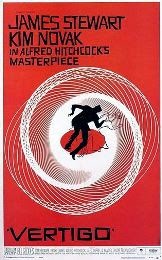
SECOND HELPINGS: Vertigo (1958)
There is something pleasing about watching a master at work. I originally rated this film back when I was in college. Re-watching it all these years later with my wife (who hadn’t seen it before) was a real treat. A modern comparison would be watching The Sixth Sense with someone who doesn’t know what’s coming. But that doesn’t do Vertigo any justice.
Because of how much time had passed between viewings, I had forgotten so many of the nuances that keep this film interesting. Vertigo is a film that creeps along its winding path at a slow but steady pace. There are very few of the ‘gotcha’ moments that fill contemporary suspense thrillers. In fact, Vertigo is almost purely suspense. The thrill comes at the end when you realize what you just experienced.
Hitchcock peppers his film with just enough peculiarity to prevent audiences from slipping into boredom. As events play out, you can’t help but wish things would move along quicker but at the same time you are engrossed by all the details that might be important. In the first half, you are constantly caught off guard by what comes next. The build-up is just so strange that it transfixes you. By the time we reach the mid-film climax, you are locked in and fully invested whatever the second half may bring.
Oh does the second half bring it! The audience is cast back into the murkiness of little details but without as much misdirection. Another revelation lets the audience in on a secret that tantalizes us as we wait for our protagonist to catch on. It’s emotionally and psychologically taxing, leaving us feeling almost as harried as the characters on screen.
I have admired James Stewart’s acting since I started taking movies seriously. He has always been such a believable presence on screen and that is very much the case in Vertigo. As an everyman ex-cop, audiences connect with Stewart because his reactions feel so genuine. His confusion, apprehension, nervousness, and frustration all echo what audiences feel while watching the film.
We don’t just watch the events of Vertigo; we experience them as if we were alongside Stewart. That kind of connection is rare and powerful. It is a doozy of a film that slowly ratchets up the tension while putting pieces together rather than yanking you from one frenetic scenario to the next. This is old-school suspense and it is a beautiful thing.
Original Rating: 4.5 out of 5
New Rating: 4.5 out of 5
Because of how much time had passed between viewings, I had forgotten so many of the nuances that keep this film interesting. Vertigo is a film that creeps along its winding path at a slow but steady pace. There are very few of the ‘gotcha’ moments that fill contemporary suspense thrillers. In fact, Vertigo is almost purely suspense. The thrill comes at the end when you realize what you just experienced.
Hitchcock peppers his film with just enough peculiarity to prevent audiences from slipping into boredom. As events play out, you can’t help but wish things would move along quicker but at the same time you are engrossed by all the details that might be important. In the first half, you are constantly caught off guard by what comes next. The build-up is just so strange that it transfixes you. By the time we reach the mid-film climax, you are locked in and fully invested whatever the second half may bring.
Oh does the second half bring it! The audience is cast back into the murkiness of little details but without as much misdirection. Another revelation lets the audience in on a secret that tantalizes us as we wait for our protagonist to catch on. It’s emotionally and psychologically taxing, leaving us feeling almost as harried as the characters on screen.
I have admired James Stewart’s acting since I started taking movies seriously. He has always been such a believable presence on screen and that is very much the case in Vertigo. As an everyman ex-cop, audiences connect with Stewart because his reactions feel so genuine. His confusion, apprehension, nervousness, and frustration all echo what audiences feel while watching the film.
We don’t just watch the events of Vertigo; we experience them as if we were alongside Stewart. That kind of connection is rare and powerful. It is a doozy of a film that slowly ratchets up the tension while putting pieces together rather than yanking you from one frenetic scenario to the next. This is old-school suspense and it is a beautiful thing.
Original Rating: 4.5 out of 5
New Rating: 4.5 out of 5
Subscribe to:
Posts (Atom)